No products added!
November 21, 2026

Why Produce Private Label Activewear in Indonesia?
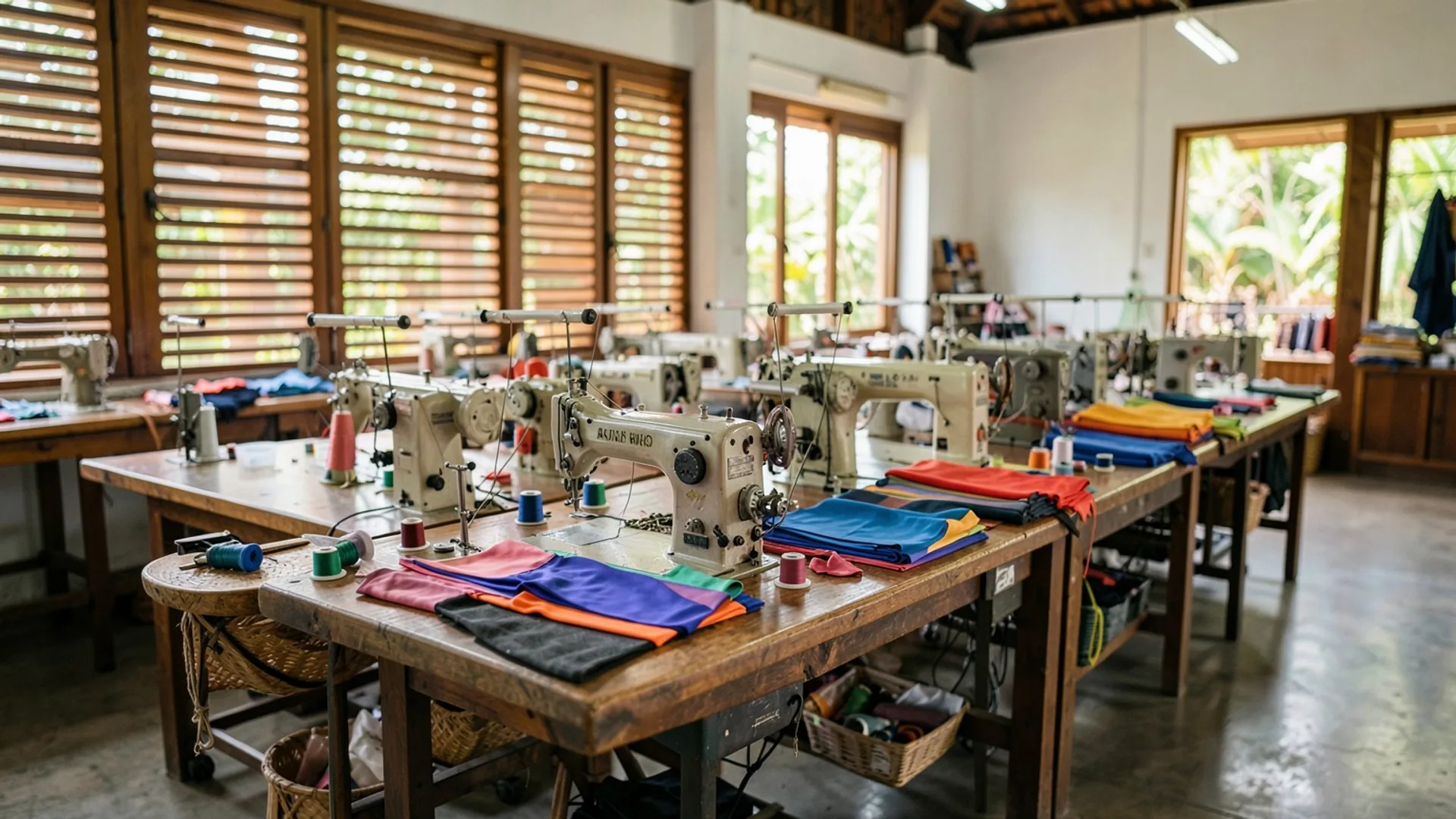
Producing private label activewear in Indonesia offers brands high-grade craftsmanship, skilled garment technicians, and flexible minimum order quantities (MOQs). Indonesian manufacturers excel in complex technical sewing, including 4-needle 6-thread flatlock stitching, moisture-wicking synthetic blends, and custom branded finishing. Additionally, facilities with duty-free fabric import licenses reduce raw material tariffs, allowing competitive pricing for export to Australia, the US, Europe, and the Middle East.
Indonesia has built a strong reputation for performance garment production over the past two decades. The sewing workforce is experienced specifically in stretch and compression fabrics, which require different handling than woven garments. Flatlock seams, bonded hems, and silicone grip taping are standard capabilities, not special requests.
Bali in particular has become a hub for smaller, founder-led factories that combine technical output with direct communication. For international brands, this means faster feedback loops during sampling and clearer accountability during bulk production. You are not routed through a sales intermediary. The team managing your tech pack is the same team overseeing the cutting room and sewing floor.
Indonesia’s export infrastructure also supports brands shipping to multiple markets simultaneously. Manufacturers holding their own export accounts can consolidate orders, prepare commercial invoices and packing lists, and arrange freight through trusted forwarding partners. For a brand scaling from 300 pieces to 5,000 pieces, that consistency in the supply chain matters significantly.
The combination of skilled labor, technical seam capabilities, and export-ready logistics makes Indonesia a practical and cost-effective choice for private label activewear production in 2026.
What Customization Options Exist for Private Label Activewear?
Private label activewear customization in Indonesia includes custom heat-transfer neck tags, branded woven labels, custom-dyed compression fabrics, silicone grip taping, and eco-friendly polybags. Brands can either submit complete tech packs or develop custom patterns through 3D digital sampling. Manufacturers apply your branding directly onto stock or custom-developed activewear silhouettes, ensuring full brand identity across leggings, sports bras, and performance tops.
Here is a breakdown of the main customization categories available through custom activewear and sportswear services:
- Labels and tags: Heat-transfer inner neck labels eliminate the scratchy feel of woven neck tags. Woven labels can be placed at the side seam, waistband, or hem. Hang tags are produced with your brand artwork and attached before export packaging.
- Branded elastics: Custom jacquard-woven elastics carry your logo or brand name along the waistband. This is a high-impact branding detail that is especially visible on leggings and biker shorts.
- Silicone grip tape: Applied along waistbands and bra bands to prevent garments from shifting during movement. Can be printed in custom colors or with a subtle brand wordmark.
- Custom fabric development: Compression fabrics can be custom-dyed to match Pantone references. In-house fabric printing allows for all-over prints, panel prints, and sublimation on polyester and nylon blends.
- Packaging: Eco-friendly polybags, branded tissue, and custom kraft hang tags are all available. Packaging can be configured for retail display or direct-to-consumer shipping.
Brands entering the market without a complete tech pack can still move forward. The design and pattern-making team will work from sketches, reference samples, or mood boards to build a digital pattern before cutting any fabric. This keeps sampling costs predictable and reduces the number of physical revision rounds needed.
How Does the Activewear Manufacturing Process Work in Bali?
The full-service activewear manufacturing process at a Bali-based factory typically follows these stages:
- Tech pack review: The production team reviews your tech pack for completeness, flagging any missing measurements, stitch specifications, or fabric callouts before work begins. If you do not have a tech pack, the team builds one from your reference materials.
- Digital pattern making: Patterns are drafted digitally using CAD software and graded across your required size range. Digital grading reduces human error across sizes and allows fast adjustments without redrawing from scratch.
- 3D design and virtual fitting: Before cutting fabric, the digital pattern can be rendered in 3D to simulate fit and drape. This step is especially useful for compression leggings and structured sports bras, where seam placement directly affects how the garment performs on the body.
- Physical sampling: Once the digital pattern is approved, a physical sample is cut and sewn using the specified fabric. The first sample is reviewed against the tech pack, fit comments are noted, and corrections are made before a second sample is produced if needed.
- Staged quality control: Quality checks happen at multiple points, not just at final inspection. Fabric is inspected on arrival. Cut panels are checked for accuracy before sewing begins. Inline checks during sewing catch seam tension and stitch count issues early. Final inspection measures finished garments against the approved sample and tech pack specifications.
- Label attachment and packaging: Approved garments receive labels, hang tags, and are folded and bagged according to your packaging brief. Cartons are labeled with style, color, size, and quantity for straightforward warehouse receiving.
- Export documentation and shipping: The factory prepares commercial invoices, packing lists, and certificates of origin. Goods are handed to a freight forwarder for air or sea shipment to your destination.
Sampling typically takes 2 to 3 weeks after technical specs and fabrics are confirmed. Bulk production usually ranges from 4 to 6 weeks depending on order volume and design complexity.
What Are the Technical Stitching and Fabric Options for Activewear?
Choosing the right seam type and fabric is as important as the design itself. The wrong combination causes discomfort during wear, fabric distortion after washing, or seam failure under load.
Seam Types
Flatlock stitching (4-needle 6-thread): This is the industry standard for high-impact activewear. The seam lies completely flat against the skin, eliminating the ridge that causes chafing during running, cycling, or yoga. It also creates a clean, sporty aesthetic on the outside of the garment. Flatlock is used on leggings, compression shorts, sports bras, and performance tops.
Coverstitch: Commonly used for hems on shorts, tank tops, and lighter performance wear. It produces a two-needle topstitch on the face of the fabric and a looper stitch on the underside, allowing the hem to stretch without breaking. Coverstitch is less bulky than flatlock and is appropriate where a flatter seam is not critical.
Fabric Options
- Nylon-spandex (polyamide-elastane): The most common base fabric for leggings and sports bras. Offers excellent stretch recovery, a smooth hand feel, and good moisture-wicking performance. Typically 80% nylon, 20% spandex.
- Polyester-spandex: More affordable than nylon blends, with good moisture management. Commonly used for performance tops and training shorts. Holds printed graphics well, making it a strong choice for custom all-over print designs.
- Recycled fabric options: Fabrics made from recycled polyester or recycled nylon are available for brands prioritizing sustainable sourcing. These carry similar technical performance to virgin synthetics and are increasingly requested by brands selling into the Australian and European markets.
- Compression fabric: Higher-weight nylon or polyester-spandex fabric engineered for graduated compression. Used in performance leggings and recovery wear. Requires precise tension control during sewing to maintain compression properties across the finished garment.
How Do Import Facilities and Worldwide Shipping Work from Indonesia?
Raw material sourcing is one of the largest variables in activewear production cost. Performance fabrics, specialty trims, and recycled fiber blends are often imported from South Korea, Taiwan, Japan, or Europe. Without the right import structure, those tariffs accumulate quickly and are passed on to the client.
Bali Garment Manufacturer holds a duty-free fabric import facility license issued under Indonesian customs authority. This allows specific performance and recycled fabrics to be imported without paying standard import duties, reducing raw material costs directly. The savings pass through to production pricing, which makes a meaningful difference on orders of 500 pieces or more. For reference on Indonesian customs regulations and licensing categories, the official source is the Indonesian Directorate General of Customs and Excise.
On the export side, Bali Garment Manufacturer holds its own export account, meaning your order does not need to be routed through a third-party export agent. This reduces handling fees and gives the factory direct control over documentation accuracy, which matters for customs clearance in destination countries.
Current shipping destinations include:
- Australia: Sea freight from Bali to Australian ports takes approximately 10 to 14 days. Air freight is available for smaller urgent orders.
- United States: Sea freight transit runs approximately 20 to 28 days depending on the destination port. Air freight is available for pre-launch stock or fill-in orders.
- Europe: Sea freight to European ports typically takes 25 to 35 days. DDP (Delivered Duty Paid) arrangements can be discussed for select clients.
- Kuwait and the Middle East: Sea freight takes approximately 15 to 20 days. The factory has experience producing and exporting modest activewear, including full-coverage leggings, long-sleeve tops, and hijab-compatible sports sets, to this market.
Frequently Asked Questions
What is the minimum order quantity (MOQ) for private label activewear in Indonesia?
Minimum order quantities start with flexible low-batch tiers ideal for startups testing new activewear collections, scaling up to 25,000 pieces per month for established global brands.
What type of seams are best for private label activewear production?
Flatlock stitching (4-needle 6-thread) is ideal for high-impact activewear like leggings and compression tops as it creates flat, chafe-free seams. Coverstitch is commonly used for hems and lighter performance wear.
Can I import performance fabrics into Indonesia duty-free?
Yes. Manufacturers holding a duty-free fabric import facility license can import high-performance or recycled activewear fabrics without paying import duties, passing raw material savings directly to international clients.
How are private label activewear products branded?
Branding includes custom heat-transfer inner neck labels, woven side tags, custom silicone logos, branded elastic waistbands, hang tags, and custom polybags.
How long does sampling and bulk activewear production take?
Sampling typically takes 2 to 3 weeks after technical specs and fabrics are confirmed. Bulk production usually ranges from 4 to 6 weeks depending on order volume and design complexity.
Start Your Private Label Activewear Line
Building a private label activewear brand requires a manufacturer that can handle technical sewing, custom branding, sustainable fabric options, and reliable export logistics under one roof. All of those capabilities exist in Bali, and they are available from low MOQ starting points that make sense for new brands and growing ones alike.
If you are ready to move from concept to production, the next step is straightforward. Share your tech pack, reference samples, or design brief, and the team will come back with a production proposal, fabric recommendations, and a realistic timeline.
Leave a Reply
Related Posts
November 25, 2026
What Are the Key Stages of the Garment Sampling Process? The garment sampling process typically follows five...
November 24, 2026
What Is a Low MOQ Private Label Activewear Manufacturer? A low MOQ private label activewear manufacturer produces...
November 24, 2026
Getting a garment sample right is one milestone. Getting that same garment right across 500 or 5,000...