No products added!
November 20, 2026
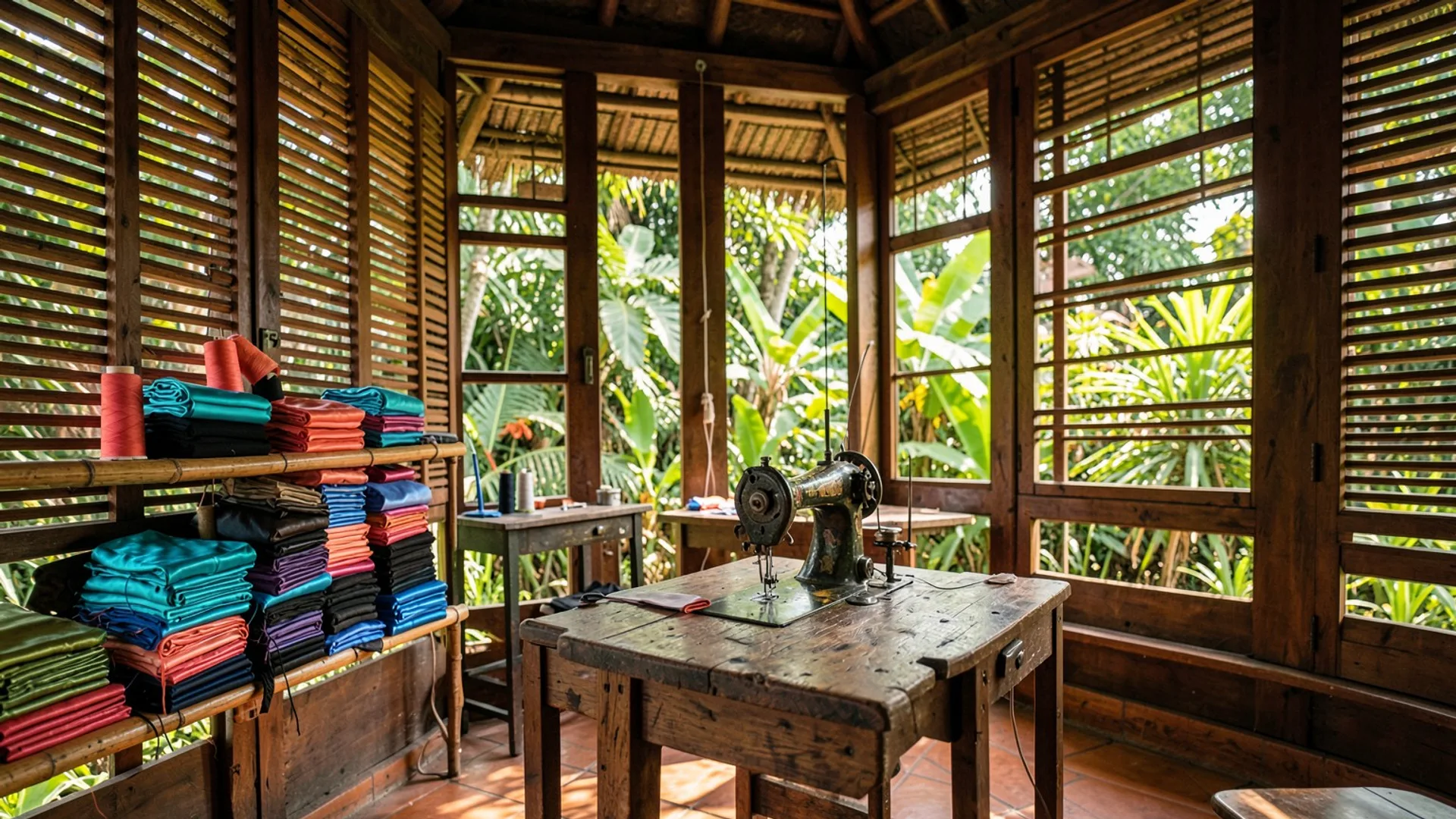

Starting a swimwear brand in 2026 is a concrete, achievable goal, if you work through the right steps in the right order. This guide covers every stage, from defining your niche to clearing customs, written from a production perspective so you understand what actually happens on the factory floor. If you are still weighing whether to build a swimwear brand or a broader apparel brand first, the general guide to starting a fashion brand gives you the wider framework before you narrow down.
Why Swimwear Is a Viable Niche for a New Brand in 2026
Swimwear has genuine structural demand, not seasonal hype. Tropical travel markets in Southeast Asia, the Pacific, and the Caribbean generate year-round purchasing cycles. Australia is a repeat-purchase market where swimwear is functional clothing, not a holiday luxury. The Middle East, particularly the Gulf states, is seeing fast growth in modest swimwear as an underserved product category with limited quality supply.
Three demand signals support entering this market now. First, the global swimwear category continues to expand as international travel normalizes post-pandemic. Second, modest swimwear, full-coverage one-pieces, burkini styles, long-sleeve rash guard sets, remains undersupplied relative to consumer demand in the GCC region and among Muslim communities worldwide. Third, sustainability-positioned swimwear commands a price premium because recycled-nylon alternatives now perform comparably to virgin nylon, making a credible sustainability story achievable without product compromise.
Step 1: Define Your Swimwear Niche and Target Customer
Six swimwear niches are most viable for a startup entering in 2026: performance sport swimwear, resort and holiday wear, modest swimwear (burkini and full-coverage styles), sustainable collections using recycled fabrics, plus-size inclusive fits, and surf or activewear hybrids. Each niche has different production requirements. Performance swimwear demands higher chlorine resistance and flatlock seaming throughout. Modest swimwear involves more complex pattern pieces and higher fabric consumption. Sustainable collections require a confirmed recycled-nylon supply chain before you brief a manufacturer.
Pick one niche to start. Not two, not three. A tighter niche means fewer SKUs, which makes a low-MOQ production run achievable. If you launch with one silhouette in one niche and test market response before expanding, you protect your cash flow and get real customer data before you commit to wider range development. The niche also defines your target customer clearly enough to make fabric, fit, and packaging decisions with confidence rather than guesswork.
Step 2: Understand the Fabrics That Make or Break a Swimwear Brand
Fabric is the most consequential decision in swimwear production. Here are the properties that matter and the questions to ask your manufacturer.
Four-way stretch and recovery. Swimwear fabric must stretch in both the horizontal and vertical directions and return to its original dimensions after repeated use. Recovery percentage tells you how much of that original shape the fabric retains. Ask your manufacturer for the recovery rating of any fabric they propose, anything below 90% recovery is a risk for fit longevity.
Chlorine resistance vs. saltwater resistance. These are different properties. Pool swimwear degrades primarily from chlorine exposure, which breaks down elastane fiber over time. Ocean swimwear is exposed to UV and salt. If your target customer is a pool swimmer, chlorine resistance is a non-negotiable spec. For resort holiday wear, UV resistance is more relevant. Confirm which environment your fabric is rated for.
UV50+ construction. UV protection in swimwear fabric comes from a tighter knit structure, not from a dye or finish additive. A fabric rated UPF 50+ blocks more than 98% of UV radiation because the weave physically prevents light transmission. Ask to see the test certification for any fabric claiming UV50+, it should reference a standard such as OEKO-TEX Standard 100 or an equivalent testing body.
Recycled nylon. For sustainability-positioned brands, recycled nylon offers comparable stretch-recovery to virgin nylon and takes print well. The key qualification: confirm the fabric has a verified recycled-content certification from the supplier, not just a marketing claim on the swatch card.
Lining choices. Swim briefs and one-pieces require an inner lining for opacity when wet. Standard lining is a lightweight nylon-spandex knit in white or nude. Confirm that the lining fabric is also chlorine-resistant, as a degraded lining fails before the outer shell and cannot be replaced post-production.
Step 3: Create a Tech Pack Before You Contact Any Manufacturer
A tech pack is the document that converts your design idea into a production instruction. Without it, a manufacturer cannot quote accurately, cannot start pattern making, and will produce a sample based on assumptions that may cost you two or three extra revision rounds.
A complete swimwear tech pack must include: a flat sketch showing front and back views with all seam lines visible; construction details specifying seam type (flatlock is the standard for swimwear, it lays both seam allowances flat against the body, reducing chafe and allowing the seam to stretch with the fabric); fabric callout with stretch percentage; colorway reference with Pantone or fabric swatch; label placement diagram; stitch count per inch; and a size spec sheet with all graded measurements.
A mood board is not a tech pack. It communicates aesthetic direction but gives a production team nothing to cut or sew from. If you have a concept but not a complete spec document, manufacturers including Bali Garment Manufacturer offer product development support using digital pattern making and 3D design tools to build your tech pack from sketches. Expect this service to add time and cost compared to arriving with a complete document. The investment is worthwhile, a thorough tech pack reduces sampling rounds, which reduces cost and lead time overall.
Step 4: Choose the Right Manufacturer for Your MOQ and Growth Stage
Not all manufacturers are built for the same client profile. Evaluate any factory you approach against these five criteria.
In-house printing or outsourced? A factory that outsources fabric printing adds a supply chain link, a lead time variable, and a potential quality control gap. In-house printing means tighter color control and faster turnaround on revisions.
Scalability. Can the factory handle your 50-piece sampling run and your 2,000-piece bulk order on the same quality standard? As a low MOQ swimwear manufacturer in Bali, Bali Garment Manufacturer works with brands from their first sample through to 25,000 pieces per month, so the production relationship does not need to be rebuilt as volume grows.
Export-import license. A factory with its own export-import account handles customs documentation directly. This removes an administrative layer for your brand and reduces the risk of documentation errors that delay shipments.
Duty-free fabric import. A duty-free fabric import facility allows the manufacturer to import raw materials without paying import duty on those inputs, which lowers the fabric cost passed on to you. Confirm whether a factory holds this facility or is absorbing import duty into their quoted price.
Communication. Does the factory respond within your business hours? Do they communicate clearly in English? Poor communication is the most common complaint from brands that have moved production between factories. For a full factory evaluation framework, see the swimwear manufacturing in Bali complete guide.
Two red flags to avoid: a factory that quotes a price without reviewing your tech pack (they are guessing), and a broker presenting themselves as the manufacturer (you lose direct production oversight and add a margin layer with no production control).
Step 5: Navigate the Sampling and Fit-Approval Process
The standard sampling sequence is: proto sample, fit sample, pre-production sample. Do not skip stages. For a detailed walkthrough of the full production sequence, see the complete swimwear manufacturing process from sketch to shipment.
The proto sample confirms construction interpretation. The fit sample is where you test on a live fit model, not a dress form, stretch fabrics behave under body movement in ways that a static form cannot reveal. At fit-sample stage, check: seam integrity under full stretch, lining opacity when the fabric is wet, label placement under movement, and color match against your approved fabric swatch.
Two to three revision rounds is a normal sampling process for swimwear. Each round typically takes one to two weeks. Build this into your launch timeline. Approving a pre-production sample locks the construction before bulk production begins, skipping straight to bulk after a proto sample is the single most common cause of production rework that costs more time and money than the sampling stage would have.
Step 6: Plan Your Labels, Packaging, and Brand Presentation
Labels and packaging are not optional extras. For export to Australia and the United States, fiber content labeling is a legal requirement. Both markets require the percentage of each fabric component (for example, 80% Nylon, 20% Elastane), a country of origin declaration (Made in Indonesia), and care instruction symbols. The US additionally requires an RN number or company name on import labels. Errors caught at customs can hold an entire shipment.
Woven care labels, custom hang tags, inner sizing labels, and poly bag or tissue-wrap packaging can all be managed by a full-service manufacturer. Bali Garment Manufacturer handles in-house services including fabric printing, pattern making, and packaging, removing the need for a separate supplier relationship and keeping label specifications inside the same production file as your tech pack.
Step 7: Understand Export Shipping From Indonesia to Your Market
Shipping timelines vary by destination and method. These are typical ranges, not guarantees, confirm current lead times with your freight forwarder at the time of booking.
- Australia: 3 to 7 days by air freight from Bali. Proximity makes Australia one of the most cost-effective air freight destinations from Indonesia.
- United States: 10 to 14 days by air, 25 to 35 days by sea freight. Tariff classification under the correct HTS code for swimwear affects the duty rate your importer pays, check the US Customs Tariff Schedule or confirm with your customs broker before your first shipment.
- Europe: 10 to 16 days by air, up to 40 days by sea. CE marking is irrelevant for garments, but commercial invoices, packing lists, and certificates of origin must be precise.
- Kuwait and Middle East: 5 to 8 days by air from Bali. Import duty rates vary by country, your freight forwarder should confirm the applicable rate for your destination before you finalize pricing.
A factory with its own export-import account manages customs documentation in-house, which reduces the administrative burden on your brand and lowers the risk of documentation errors that delay clearance.
Common Mistakes First-Time Swimwear Brands Make
- Too many SKUs in the first run. Launching with five silhouettes instead of one or two makes the MOQ harder to hit and splits your testing data across too many variables. Start with one silhouette per niche.
- Skipping the fit sample. Saving one week at sampling stage regularly costs three weeks of production rework. Fit samples on swimwear are not optional.
- Choosing fabric by color swatch alone. Always request a stretch-and-recovery test on the actual fabric before confirming. Color and texture tell you nothing about performance.
- Underestimating lead time. First orders require a 14 to 20 week buffer from finalized tech pack to goods in hand. Build this into your launch date, not around it.
- Treating packaging as an afterthought. Labels ordered separately after bulk production is complete delay the entire shipment. Build label specs into the tech pack from the start.
Frequently Asked Questions
What Does It Actually Cost to Start a Swimwear Brand?
Startup cost depends on your MOQ and whether you have a tech pack ready. A realistic first production run with a low-MOQ manufacturer in Bali, including sampling, fabric, production, labels, and air freight to Australia or the US, typically requires a minimum budget in the low-to-mid four figures USD. The largest variables are your silhouette count and the number of sampling revision rounds. Requesting a quote with your tech pack and target quantity gives you an exact figure; any number quoted without seeing your design is a guess.
What Is the Minimum Order Quantity for a New Swimwear Brand?
MOQ varies by manufacturer and by style complexity. At Bali Garment Manufacturer, emerging brands can start with a low MOQ to test market response before committing to bulk production. A simpler silhouette with an existing fabric stock generally allows a smaller starting quantity than a custom print on a complex construction. The important point is that your MOQ at the sampling stage and your MOQ at bulk production can be different, a good manufacturing partner plans both conversations with you upfront.
How Long Does It Take to Launch a Swimwear Brand From First Design to First Shipment?
Realistically, plan for 14 to 20 weeks from a finalized tech pack to goods in hand. That breaks down roughly as: 2 to 3 weeks for pattern making and proto sample, 2 to 3 rounds of fit sampling at 1 to 2 weeks each, 8 to 10 weeks for bulk production once the pre-production sample is approved, and 3 to 7 days air freight to Australia or the US. Skipping fit-sample rounds to save time almost always costs more time overall through production rework.
Do I Need a Tech Pack to Work With a Swimwear Manufacturer?
A tech pack is the most efficient way to start. Without one, a manufacturer cannot quote accurately or begin pattern making. If you have a concept but not a full tech pack, some manufacturers, including Bali Garment Manufacturer, offer product development support using 3D design tools to build your tech pack from sketches. Expect this to add time and cost compared to arriving with a complete spec document.
What Fabric Should I Use for My First Swimwear Collection?
For a first collection, a mid-weight nylon-spandex blend (typically 80% nylon, 20% elastane) is the most versatile starting point. It offers good four-way stretch, reasonable chlorine resistance, and takes print well. If sustainability is a core brand value, recycled nylon is a viable alternative with comparable performance. Avoid PET-based fabrics for swimwear, they lose stretch-recovery faster in chlorinated water than nylon blends.
What Is the Difference Between Flatlock and Coverstitch Seams for Swimwear?
Flatlock seaming stitches two panels together so both seam allowances lie flat against the body: no raised ridge, reduced chafe, and the seam stretches with the fabric. This is the standard for swimwear and activewear. Coverstitch adds a decorative or reinforcement row of stitching on top of an existing seam. Both can appear on the same garment, but flatlock is the structural seam choice for performance swimwear. Requesting flatlock on your tech pack is a basic quality signal to any manufacturer.
Can I Sell Modest Swimwear Through a Bali Manufacturer?
Yes. Modest swimwear, including full-coverage one-pieces, burkini-style designs, and long-sleeve rash guard sets, is a production category Bali Garment Manufacturer works with, particularly for brands targeting Kuwait, the UAE, and broader Middle East markets. The fabric and seam requirements are similar to performance swimwear, but the pattern complexity is higher, which affects sampling time. Share your coverage requirements and the target market in your initial brief so the manufacturer can flag any construction specifics early.
What Labeling Is Legally Required When Exporting Swimwear to Australia or the United States?
Both markets require fiber content labels stating the percentage of each fabric component (e.g., 80% Nylon, 20% Elastane), a country of origin declaration (Made in Indonesia), and care instruction symbols or text. The US additionally requires an RN number or company name on the label for imports. Australia follows the Australian Consumer Law labeling code. Your manufacturer should build label specifications into the tech pack. Errors caught at customs can hold an entire shipment, so confirm label compliance before bulk production begins.
Next Step
Starting a swimwear brand is a process of layered decisions, each one making the next one easier: niche first, then fabric, then tech pack, then manufacturer, then sampling, then packaging, then export. Work through them in that order and you avoid the most expensive mistakes that slow first-time brands down.
Tell us about your swimwear brand, we’ll outline the next step: contact Bali Garment Manufacturer here.
Leave a Reply
Related Posts
November 21, 2026
What Makes a Qualified Modest Swimwear Manufacturer? A qualified modest swimwear manufacturer understands the specific technical engineering...
November 19, 2026
What Does Low MOQ Actually Mean for a Swimwear Brand? MOQ stands for minimum order quantity. It...