No products added!
November 13, 2026

What Does ‘Bali Garment Manufacture’ Actually Cover?
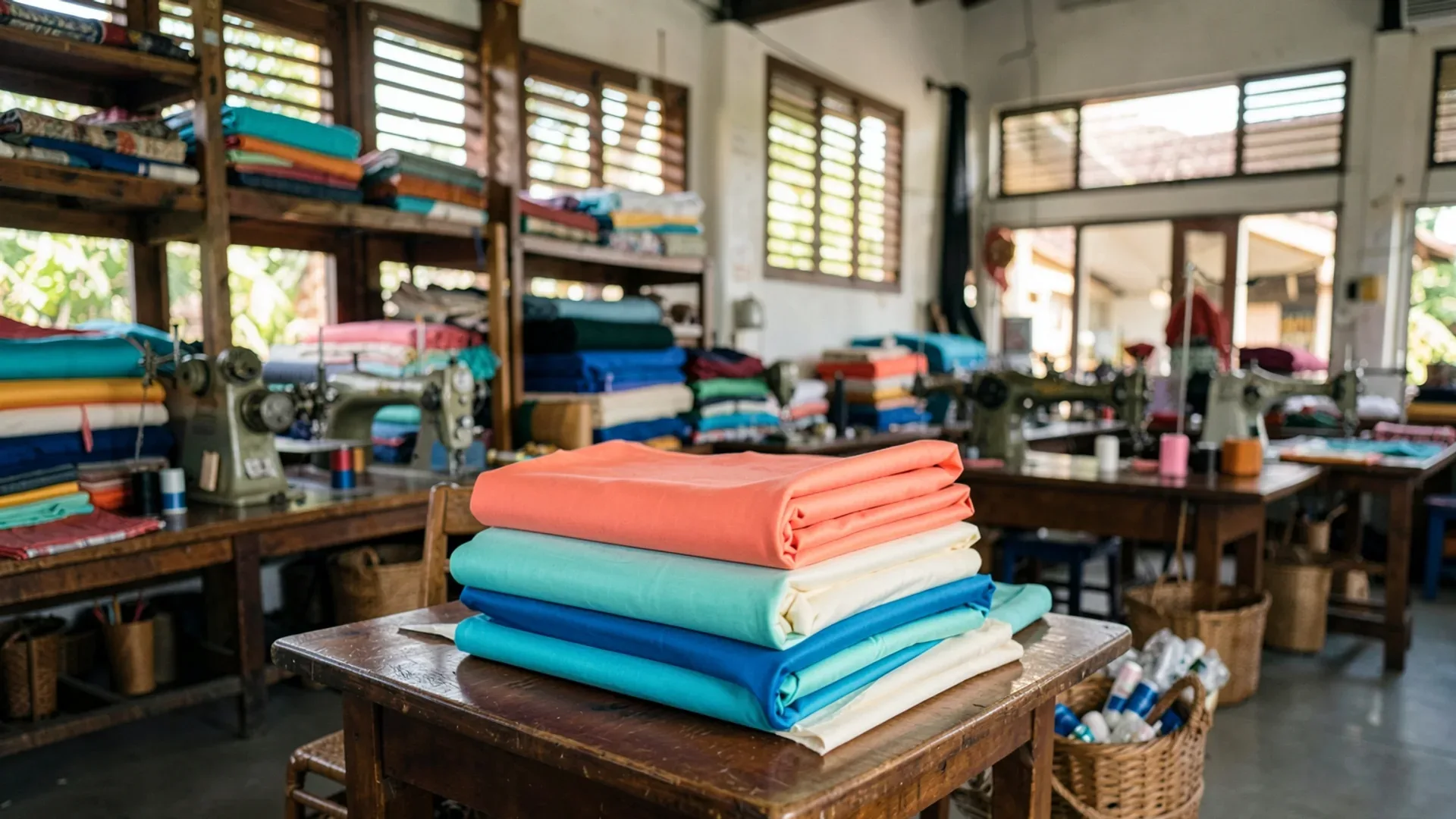
Bali garment manufacture refers to the full production cycle, pattern making, fabric sourcing, cutting, sewing, printing, quality control and export shipping, carried out by factories based in Bali, Indonesia. It covers multiple product categories: swimwear, activewear, resortwear, modest wear, streetwear and uniforms. The best Bali factories handle every stage under one roof rather than outsourcing steps, which keeps lead times shorter and quality easier to control.
At Bali Garment Manufacturer, every stage of production happens in-house. That includes digital pattern making, in-house fabric printing, cutting, sewing and staged quality control, through to labelling, packaging and export shipment. This is full-package manufacturing, not CMT (Cut, Make, Trim). In a CMT arrangement, the buyer supplies the fabric and the factory only cuts and sews. Full-package means the factory manages sourcing, all production stages and logistics, which is what most international brand owners actually need.
If you want to understand why buyers choose Bali for garment manufacturing as a production base, the combination of skilled craftsmanship, competitive costs and direct export capability makes a strong case. This article walks through each production stage so you know exactly what happens between sending a brief and receiving a finished shipment.
Stage 1: Brief and Tech Pack: Where Every Order Starts
Every order begins with a brief. The ideal brief is a full tech pack: technical drawings, construction notes, seam specifications, fabric callouts, graded measurements and trim details. If you have that, production can start quickly.
Many buyers, particularly startups, do not have a completed tech pack. That is not a blocker. A clear sketch, a reference sample and a written list of requirements, fabric type, target fit, intended market, labelling needs, gives the production team enough to convert into workable specs. The factory’s digital pattern making and 3D design tools are applied at this point to build accurate patterns from incomplete references before a single piece of fabric is cut.
What does cause delays is a vague or incomplete brief that only becomes clear after the first sample is returned. Missing seam specifications, unconfirmed fabric choices or unclear sizing grading are the most common culprits. An incomplete brief is the single most common cause of sampling delays in offshore garment production. Being specific upfront saves revision rounds later and reduces your overall lead time.
The more detail you provide at briefing stage, the more accurately the factory can quote, plan fabric sourcing and begin pattern work.
Stage 2: Fabric Sourcing and the Duty-Free Advantage
Once the brief is confirmed, fabric sourcing begins. Bali Garment Manufacturer holds in-house fabric stock suited to swimwear, activewear and resortwear production, including nylon-spandex blends, performance polyester and supplex. Buyers can choose from this stock, specify a fabric they want the factory to source, or supply their own material.
For buyers specifying imported technical fabrics, the factory’s duty-free fabric import facility is a material cost advantage. Standard import duties on technical fabrics entering Indonesia can add meaningfully to per-unit cost. Because Bali Garment Manufacturer holds a duty-free import facility for export production, those duties are removed for fabric brought in specifically for orders that will ship overseas. This applies to materials such as recycled nylon, performance supplex and technical polyester blends.
Eco-friendly and recycled fabric options are available, including recycled polyester used in swimwear and activewear. When specifying a sustainable fabric, always ask for the material data sheet and confirm the fabric’s origin and certification. The factory will not make broad green claims it cannot back up with documentation.
Fabric selection is confirmed before sampling begins. Getting this right at stage two prevents colour-matching issues and construction problems further down the line.
Stage 3: Sampling: Why This Step Determines Production Quality
Sampling is where designs become physical garments for the first time. The workflow runs in this sequence: first sample, fit review by the buyer, revision rounds if needed, then final pre-production sample approval before bulk cutting begins.
For most styles, sampling runs one to three revision rounds. Simple styles with a clean brief typically need fewer rounds. Complex construction, unusual fabrics or significant fit changes between rounds add time. A realistic sampling timeline is two to four weeks depending on complexity and revision speed on the buyer’s side.
Technical decisions are confirmed during sampling, not assumed. Seam choice is one of the clearest examples: flatlock seams lie flat against the skin and are standard in performance swimwear and activewear; coverstitch seams offer a different finish suited to specific garment types. The right choice depends on the garment’s end use, the fabric weight and the aesthetic the brand wants. These decisions are locked in during sample approval, not changed during bulk.
Skipping or rushing pre-production sample approval is where most quality problems in offshore garment production originate. Approving a sample that still has fit or construction issues, then hoping bulk production resolves them, does not work. The complete swimwear manufacturing process covers this sequence in more depth for swimwear-specific production.
The factory will not begin bulk production without an approved pre-production sample on file.
Stage 4: Cutting, Sewing and In-House Printing
Once the pre-production sample is approved, production moves to the floor. The sequence runs as follows:
- Pattern grading: the approved base pattern is graded across the size run using digital tools, keeping proportions accurate at every size.
- Fabric lay planning and cutting: fabric is laid and cut to minimise waste while maintaining grain line accuracy.
- Assembly and sewing: garment panels are assembled using the seam construction confirmed at sampling.
- In-house printing and decoration: sublimation printing, DTF (direct-to-film) and polyflex heat transfer are all handled in-house.
Keeping printing in-house is a deliberate operational choice. When printing is outsourced, colour matching between the print facility and the sewing floor becomes an external variable the factory cannot fully control, and turnaround adds days or weeks to the schedule. In-house printing means colour is matched directly against the production fabric, and the print team and sewing team work in the same building.
The full factory service at Bali Garment Manufacturer supports production capacity of up to 25,000 pieces per month across product categories. For exact capacity availability on your order timeline, confirm when you place your brief.
Stage 5: Quality Control: What Happens Before Anything Is Packed
Quality control runs at three points in the production sequence, not just at the end.
- Inline checks during sewing: stitch consistency, seam alignment and construction accuracy are checked as garments move through the sewing line, catching problems while they can still be corrected without scrapping finished pieces.
- End-of-line inspection: completed garments are checked against the approved pre-production sample for measurements, finish and construction.
- Final pre-pack audit: a final check before garments are folded, tagged and packed for shipment.
Founder Kadek Darma Putra’s professional background is specifically in quality control, alongside tailoring, cutting and marking, and production management. That background is reflected in how the QC process is structured: catching a problem at the inline stage costs far less time and material than finding it at final audit.
Honest framing: QC catches and reduces defects. It does not guarantee zero defects in any production run. When defects are identified, they are handled through re-work or replacement pieces, not shipped and left for the buyer to discover. Any quality issue found at pre-pack is resolved before the order leaves the factory.
Stage 6: Labels, Packaging and Export Shipment from Bali
Branding and packaging are handled as part of the full-package service. Options include:
- Woven labels (brand name, logo)
- Care and content labels
- Hang tags (standard or custom die-cut)
- Polybag packaging or retail-ready packaging
Label artwork and packaging specifications are confirmed before bulk production begins, not added at the end. This keeps the finishing stage on schedule.
For export logistics, Bali Garment Manufacturer holds its own export-import account. This means orders ship directly to the buyer’s country without needing a third-party Indonesian trading company as intermediary, which removes an extra cost layer and simplifies documentation.
Shipping modes to key markets follow standard freight logic: sea freight is used for bulk orders going to Australia, the US and Europe, where transit time is acceptable; air freight suits urgent orders or smaller shipments where speed is the priority. Shipping cost and transit time are quoted per order based on destination, shipment weight and volume. Fixed shipping figures quoted before an order is confirmed are not reliable, so the factory quotes these on a per-order basis.
How Low MOQ and Scale-Up Work in Bali Garment Manufacture
One of the structural problems for growing brands is the factory switch. A startup manufactures at low MOQ with one factory, then needs to move to a higher-capacity factory as volume grows. That switch means rebuilding patterns, re-qualifying construction, retraining a new team on the brand’s standards and absorbing the risk of a production quality change.
Bali Garment Manufacturer is built to remove that problem. A brand can place a low MOQ order for a first style run to test the market, and scale to thousands of pieces per style with the same factory, the same patterns on file, the same QC standards. A brand at 50 pieces per style in year one can be at 5,000 pieces per style in year two without changing suppliers, renegotiating from scratch or starting the sample process over.
The exact MOQ per style depends on fabric type and construction complexity. Confirm the specific figure when you send your brief.
What Should a Buyer Prepare Before Contacting a Bali Garment Factory?
Before reaching out, have these details ready: product category, number of styles, target quantity per style, any fabric specifications, branding requirements (labels, tags, packaging), and your target delivery window. A tech pack speeds things up, but a clear sketch plus written notes is a workable starting point. The more specific your brief, the fewer back-and-forth rounds are needed before sampling begins.
Use this quick checklist before making contact:
- Product category (swimwear, activewear, resortwear, streetwear, uniforms)
- Number of styles in the range
- Target quantity per style
- Fabric preferences or specifications
- Labelling and packaging requirements
- Target delivery window
- Tech pack, reference samples or sketches
The cleaner your brief, the faster the factory can move from first contact to sampling. For more on evaluating a factory before committing, the buyer’s evaluation checklist is a useful next step.
Frequently Asked Questions
- What is the minimum order quantity for garment manufacturing in Bali?
- MOQ varies by factory and product type. At Bali Garment Manufacturer, low MOQ orders are available for startups testing a new style, with the same factory able to scale to 25,000 pieces per month as a brand grows. The exact MOQ per style depends on fabric type and construction complexity. The best way to confirm is to send your brief and ask.
- How long does garment production take in Bali from start to shipment?
- Lead time depends on order complexity, sample rounds and quantity. As a general guide: sampling takes two to four weeks, and bulk production after approved samples runs three to six weeks, plus shipping transit. Tight timelines are possible for repeat orders with approved samples already on file. Exact lead time is confirmed when the order is placed.
- Do Bali garment factories handle their own export shipping?
- Not all do. Bali Garment Manufacturer holds its own export-import account, which means orders ship directly without needing a third-party Indonesian trading company. For export markets like Australia, the US and Europe, sea freight is standard for bulk orders; air freight suits urgent or smaller shipments. Shipping cost and mode are quoted per order.
- Can I use my own fabric when manufacturing garments in Bali?
- Yes. You can supply your own fabric, specify a fabric you want the factory to source, or choose from in-house stock. If you specify an imported technical fabric such as recycled nylon or performance supplex, the factory’s duty-free import facility can bring it in without standard import duties, which reduces your per-unit material cost on export orders.
- What is the difference between CMT and full-package garment manufacturing?
- CMT (Cut, Make, Trim) means the factory cuts and sews fabric you supply. You manage fabric procurement separately. Full-package manufacturing means the factory handles fabric sourcing, all production stages, labelling, packaging and export shipment. Bali Garment Manufacturer operates as a full-package factory, though it can accommodate buyers who want to supply their own fabric.
- Is sustainable or recycled fabric available from Bali garment manufacturers?
- Yes, recycled and eco-friendly fabric options are available, including recycled polyester used in swimwear and activewear production. When specifying sustainable fabrics, ask the factory for the material data sheet and confirm the fabric’s origin. Avoid factories that make broad green claims without being able to name the material and its source.
Next Step
Every production run at Bali Garment Manufacturer starts with a brief. Send your product details, style count, target quantity and any fabric or branding requirements, and the production team will walk you through the process from there.
Leave a Reply
Related Posts
November 18, 2026
What Does Bali Garment Manufacturer Actually Produce? Bali Garment Manufacturer produces swimwear, activewear, resortwear, modest swimwear and...