No products added!
November 26, 2026
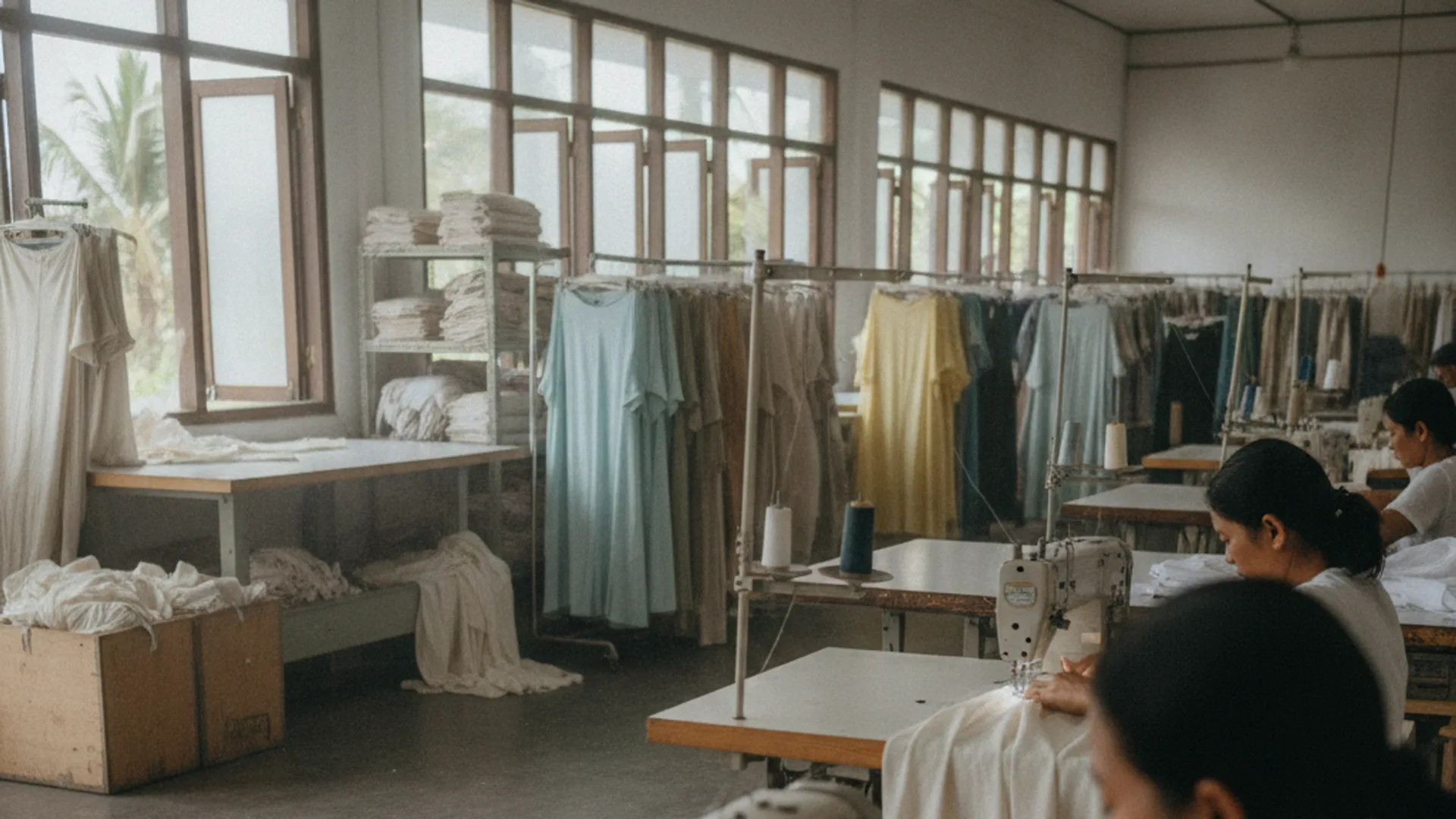

Why Sourcing Resortwear Manufacturing in Indonesia Centers on Bali
Indonesia has a long history of textile production, but not every region specializes in what resortwear demands. Resortwear is not just casual clothing. It requires specific construction skills: clean drape in fluid woven fabrics, accurate repeat placement for bold prints, and precise finishing on garments that will hang in boutique resort shops or sell through premium e-commerce channels.
Bali’s garment industry grew alongside its tourism economy. For decades, local makers worked with lightweight woven fabrics, natural fibers, and hand-crafted textiles to serve a clientele that expected quality. That foundation built a skilled labor pool comfortable with linen, rayon, and viscose. It also attracted investment in modern production infrastructure: digital pattern software, in-house fabric printing equipment, and the logistics networks needed to export to international markets efficiently.
Today, Bali sits at the intersection of traditional textile expertise and contemporary production technology. Brands sourcing resortwear from Bali get access to artisan knowledge built over generations, backed by tech-pack-driven workflows that meet international quality standards. The result is a manufacturing hub that can handle everything from a 50-piece capsule collection for a first-season launch to bulk resortwear orders destined for global retail.
That combination, craft plus scalability, is why brands from Australia, the United States, Europe, and the Middle East consistently choose Bali when looking for a resortwear manufacturer in Indonesia.
What Makes Bali the Premier Resortwear Manufacturing Hub in Indonesia?
Bali leads Indonesia in resortwear manufacturing due to its unmatched expertise in draping, natural fiber handling (linen, viscose, rayon), and custom digital fabric printing. Local facilities combine traditional artisan textile skills with modern 3D pattern making, low minimum order quantities, and streamlined export logistics. This allows global brands to create premium, ethically produced resortwear lines tailored for international luxury markets.
Three capabilities separate Bali from other manufacturing regions in Indonesia and Southeast Asia.
Natural fiber handling. Linen, viscose rayon, and bamboo blends behave differently from synthetic jersey. They shift on the cutting table, fray at the edges, and require careful pressing and seam finishing. Bali’s production teams have handled these fabrics consistently for years. That hands-on experience reduces fabric waste and improves cut accuracy, both of which affect your per-unit cost and your finished garment quality.
In-house digital fabric printing. Most resortwear collections rely on print. Botanical patterns, tie-dye effects, geometric repeats, and watercolor prints are all standard. Having printing capability under the same roof as cutting and sewing removes the coordination delays that come from using an outside print house. It also makes color-matching between print and garment construction more reliable.
Tech-pack-driven production. Bali Garment Manufacturer runs production from digital patterns built to your tech pack specifications. 3D design software allows virtual fit checks before a single piece of fabric is cut. This matters especially for resortwear, where silhouette and drape are selling points. Catching a fit issue in 3D costs nothing. Catching it after sampling costs time and fabric.
Explore our full resortwear production capabilities to see how each of these services fits into a complete production workflow.
How Does the Resortwear Production Process Work at Bali Garment Manufacturer?
Resortwear production begins with tech pack review and 3D digital pattern development, followed by fabric selection and custom reactive or sublimation printing. Once prototype samples are approved, bulk production enters precision cutting, assembly, and multi-stage quality control. Final garments are tagged, packaged, and exported directly from Bali using our dedicated export-import license and worldwide shipping partners.
Here is how each stage looks in practice:
- Tech pack review. We review your tech pack for completeness: measurements, construction notes, fabric callouts, print placement, and label specifications. If you are starting without a tech pack, our team can build one from your reference samples or sketches.
- 3D digital pattern making. Patterns are drafted digitally and checked in 3D before cutting. This catches silhouette and proportion issues early, which is especially important for draped styles like kaftans, wide-leg trousers, and wrap dresses.
- Fabric selection and printing. You choose from available stock fabrics or we source to order. For printed resortwear, our in-house team handles reactive printing on natural fibers and sublimation printing on synthetic blends. Print placement is mapped to the pattern pieces before fabric is cut.
- Prototype sampling. Physical samples are made, photographed, and sent to you for fit and finish review. Sampling typically takes 2 to 4 weeks after tech pack confirmation and fabric selection. Fit corrections go back into the digital pattern before bulk production begins.
- Staged quality control. QC runs at three points: during cutting (panel check), mid-production (inline inspection of construction and seam quality), and pre-shipment (final measurement and finish audit). Issues are flagged and corrected within the production run, not after the order is packed.
- Labeling, packaging, and export. Labels, hang tags, and packaging are applied to your specification. Orders ship via our own export-import license, using air or sea freight to your destination market.
Our in-house cutting, printing, and sewing services cover every one of these steps without passing your order to a third-party facility.
Fabric Options for Custom Resortwear Lines
Fabric is the starting point for any resortwear collection. The right material affects drape, print quality, durability after washing, and how the garment feels against skin in a hot climate. These are the fabric categories we work with most often for resortwear production.
- Pure linen and linen-cotton blends. Linen is the classic resortwear fabric. It is breathable, gets softer with wear, and photographs well. Linen-cotton blends reduce the tendency to crease while keeping the natural, textured hand-feel that resortwear buyers expect. These fabrics work well for shirts, trousers, shorts, and cover-ups.
- Viscose rayon. Viscose drapes exceptionally well, making it the go-to choice for fluid silhouettes: maxi dresses, wrap skirts, and wide-leg pants. It takes reactive dye beautifully, so printed viscose resortwear can carry crisp, vibrant patterns with good wash fastness.
- Tencel and bamboo blends. These plant-based alternatives offer similar drape to viscose with lower environmental impact during fiber production. They are increasingly requested by sustainability-focused brands and pair well with reactive and digital printing.
- Eco-blends with recycled content. For brands with explicit sustainability commitments, we can source woven fabrics with recycled fiber content. We separate the recycled material claim from the production process: the fabric carries the recycled content, and our manufacturing process is ethically run. Both matter, and they are not interchangeable.
International fabric sourcing is realistic and cost-effective because Bali Garment Manufacturer holds its own duty-free fabric import facility. This allows us to bring in specialized linen, Tencel, or technical woven fabrics from overseas suppliers without passing the full import duty cost to you. For brands that need a specific hand-feel or certified fabric origin, this facility makes global sourcing practical within a Bali-based production model. For general textile sourcing standards and fiber classification references, the Textile Affairs resource is a useful independent reference.
Low MOQ and Scaling: Growing Your Resortwear Brand from 50 to 25,000 Pieces
Testing a new resortwear collection carries real inventory risk. Ordering 500 units of a style that does not sell leaves you with product that ties up working capital. Our production model is built around letting brands start small and scale without changing factories.
Our low MOQ starts at 50 pieces per style per colorway. That is enough to photograph a lookbook, test wholesale buyers, run a launch campaign, and gather real sell-through data before committing to larger volumes. For a seasonal capsule collection of five styles in two colorways each, that is 500 pieces total: a manageable first order that gives you meaningful market feedback.
When sell-through data supports scaling, we move to higher production runs within the same factory, same quality processes, and same team. We work with brands up to 25,000 pieces per month. The production infrastructure is already in place. You are not asking us to change how we work. You are simply increasing volume.
This continuity matters. Switching factories as you scale introduces new fit discrepancies, new quality variables, and a new relationship to manage. Staying with one manufacturer from 50 pieces to 25,000 keeps your quality consistent and your production knowledge compounding on both sides.
Global Logistics and Duty-Free Benefits for International Brands
Shipping garments internationally from Indonesia requires a registered export license. We hold our own. That means your order does not pass through an intermediary export agent, which reduces handling, reduces risk of documentation errors, and keeps the supply chain shorter.
We ship regularly to:
- Australia (air and sea freight, east and west coast destinations)
- United States (sea freight for bulk, air for samples and small orders)
- Europe (sea freight to major ports, air for time-sensitive deliveries)
- Kuwait and the broader Middle East (air freight for fast turnaround, sea for bulk seasonal orders)
Our duty-free fabric import facility provides a second cost advantage. When we import specialty fabrics, like specific linen weights or certified eco-blends, from outside Indonesia, the duty-free status on those imports lowers the material cost that flows into your per-unit price. This keeps custom resortwear production in Bali cost-competitive even when the fabrics themselves originate from Europe or East Asia.
Combined, the export account and duty-free facility mean fewer middlemen, lower landed costs, and more direct communication between your brand and the factory handling your collection.
Frequently Asked Questions
What is the minimum order quantity (MOQ) for resortwear manufacturing in Bali?
Our typical low MOQ starts at 50 pieces per style/colorway, allowing startup fashion brands to test new resortwear collections without excessive inventory risk.
Which fabrics are best suited for custom resortwear lines?
Natural woven fabrics like pure linen, linen-cotton blends, viscose rayon, and Tencel are ideal for resortwear due to their lightweight drape, breathability, and premium hand-feel.
Can you print custom patterns on resortwear fabrics in-house?
Yes, we offer in-house digital fabric printing including reactive printing for natural fibers and sublimation for synthetic blends, ensuring crisp patterns and color fastness.
How long does the resortwear sampling process take?
Sampling typically takes 2 to 4 weeks after tech pack confirmation and fabric selection, including digital pattern creation, sample stitching, and fit adjustments.
Do you ship resortwear collections internationally from Indonesia?
Yes, we hold our own official export license and regularly ship bulk resortwear orders to Australia, the United States, Europe, Kuwait, and the Middle East via air and sea freight.
Start Your Resortwear Collection with a Factory Built for It
Bali’s combination of natural fiber expertise, in-house printing, digital pattern making, and flexible MOQ makes it the most practical choice for brands building resortwear collections in 2026. Whether you are launching a first capsule or scaling an established line, the production infrastructure is here and the minimum commitment is low enough to start with confidence.
Explore Our Full Resortwear Manufacturing Capabilities and reach out to discuss your collection brief, fabric preferences, and timeline.