No products added!
November 2, 2026
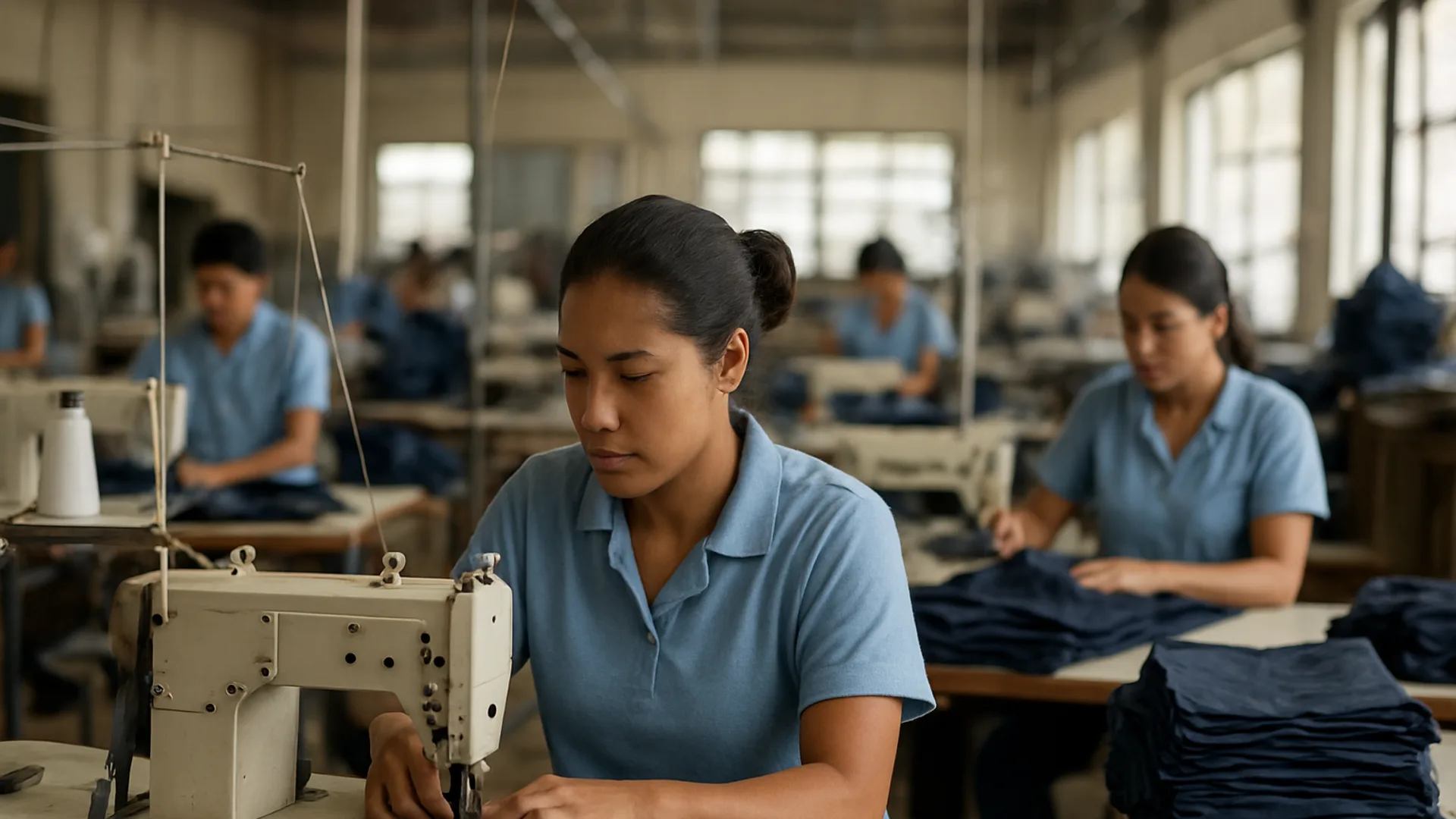

What Types of Manufacturing Companies Operate in Bali?
Bali is not a heavy industrial island. There are no large-scale steel mills or automotive assembly plants here. Manufacturing in Bali is craft-intensive and design-led, built around the island’s deep tradition of skilled handwork and its position as a global tourism and lifestyle destination.
The main manufacturing categories operating in Bali include:
- Garments and textiles: swimwear, activewear, resortwear, and private-label apparel for international buyers
- Silverware and jewelry: handcrafted pieces produced for export and local retail
- Woodcraft and furniture: decorative and functional pieces with strong export demand, particularly to Australia and Europe
- Food and beverage: Bali coffee, coconut oil, coconut sugar, and other agricultural derivatives
- Skincare and cosmetics: small-batch natural and botanical products aligned with the island’s wellness reputation
Each of these sectors reflects the same underlying strength: Bali’s workforce is skilled at small-batch, detail-oriented production. That quality standard attracts boutique and mid-market international buyers who need more than commodity volume. Data on Indonesia’s broader manufacturing output is available through Badan Pusat Statistik (BPS), Indonesia’s central statistics agency.
Why Is the Garment Industry Bali’s Strongest Manufacturing Export?
Garment manufacturing leads Bali’s export economy because the island has a multi-generational workforce skilled in tailoring, hand-finishing, and small-batch production, qualities that larger industrial regions often trade away for volume. Swimwear, activewear, and resortwear manufacturers here can offer design development, in-house fabric printing, and export shipping under one roof. A duty-free fabric import facility further reduces material costs, making the total landed price competitive for international buyers sourcing from Australia, the US, or Europe.
Several structural factors explain why garment production has become Bali’s leading export category among manufactured goods. The first is workforce depth. Generations of local tailors, pattern makers, and sewers have built a skills base that suits complex, design-forward products like swimwear and resortwear. These are not simple cut-and-sew items. They require precise pattern making, stretch-appropriate seam techniques, and careful quality control at each stage.
The second factor is supply chain access. Bali sits within reach of fabric suppliers across Java and the broader Indonesian archipelago, which means factories here can source performance knits, recycled fabrics, and woven resort fabrics without long import lead times.
The third factor is infrastructure investment. Digital pattern making, 3D design sampling, and in-house fabric printing are now standard capabilities at established Bali factories, not add-on services. This shortens development cycles and reduces the back-and-forth that can slow a product launch. Industry policy context on Indonesia’s textile and garment sector is published by the Ministry of Industry (Kemenperin).
For buyers who want to understand what Bali garment manufacturing involves across fabric, sampling, production, and export, there is a deeper guide covering the full process. For those specifically focused on swimwear, the complete guide to swimwear manufacturing in Bali covers fabric selection, seam types, MOQs, and lead times in detail.
Where Are Bali’s Main Garment Manufacturing Hubs Located?
Garment workshops and small-to-mid-size factories in Bali tend to cluster in and around a few key areas. Denpasar, as the provincial capital, has a concentration of production facilities with access to logistics infrastructure. The Kuta and Seminyak corridor has historically attracted apparel and resortwear producers because of its proximity to international buyers, sourcing agents, and the airport. Gianyar, to the east, is known for craft production and also hosts textile and garment operations.
These clusters are not formal industrial estates in the way Java’s manufacturing zones are structured. Most Bali garment facilities are mid-scale workshops and purpose-built factories serving export customers directly. That scale suits the product type: swimwear and resortwear are not commodity items and do not require the square footage of a mass-production facility.
Bali Garment Manufacturer operates in Bali and manages its own export-import documentation, shipping directly to international buyers in Australia, the US, Europe, the Middle East, and other markets. This means buyers do not work through a freight agent or a third-party intermediary. One point of contact handles production and export from start to finish.
What Should a Buyer Look for When Evaluating Bali Manufacturing Companies?
Evaluate five things before signing with any Bali factory: whether they handle the full production chain or only cut-make-trim; how low their MOQ actually goes; whether pattern making and fabric printing are done in-house or subcontracted; whether the factory holds its own export-import account; and how quality control is staged across production, not just at final inspection. A factory that can show you each of these in writing is worth a sample order. One that avoids the question usually outsources the hard parts.
Here is what each criterion means in practice:
- End-to-end capability vs. cut-make-trim only: A cut-make-trim factory receives pre-cut fabric and sews it. An end-to-end factory handles pattern making, fabric sourcing, cutting, sewing, quality control, labeling, and export. The second option reduces your coordination risk considerably.
- MOQ flexibility: Some Bali factories only take large orders. If you are launching a new brand, confirm in writing whether the factory will work with startup volumes before you invest in sampling.
- In-house fabric printing and pattern making: When these are outsourced, lead times lengthen and quality control splits across multiple sites. In-house capability means one team is accountable for the full product.
- Export-import account: A factory with its own export-import account can ship directly to your country. One without it will need a freight forwarder or consolidator to handle customs documentation, which adds cost and a communication layer.
- Staged quality control: Quality checks should happen at fabric receipt, after cutting, after sewing, and before packing. Final inspection alone catches problems too late to fix without delay.
For a structured vetting process, the buyer evaluation checklist for Bali factories covers each of these criteria with specific questions to ask during factory assessment.
How Does Bali Compare to Other Indonesian Manufacturing Regions?
Java handles the bulk of Indonesia’s garment export volume. Cities like Bandung, Surabaya, and the greater Jakarta area have large industrial facilities oriented toward commodity-scale production: basics, fast fashion, and licensed sportswear for global retail chains. That scale is appropriate for those products.
Bali occupies a different position. Its workforce is oriented toward design-intensive, smaller-batch production where craft quality and communication matter as much as unit cost. That makes Bali a stronger fit for swimwear, activewear, and resortwear brands that need product development support, flexible MOQs, and consistent quality across custom designs.
The honest trade-off is this: if you need 100,000 units of a basic T-shirt at the lowest possible unit cost, Bali is not the optimal location. If you need 500 to 5,000 pieces of a technically constructed swimsuit or resortwear collection, with in-house fabric printing and private-label finishing, Bali is a stronger choice than a high-volume Java facility that will treat your order as a low-priority small run.
Design-forward brands moving production out of China often find that Bali’s communication culture and flexible approach suit them better than a large factory where their order size does not qualify for dedicated attention.
Garment Manufacturing Capacity: What Can Bali Factories Actually Produce?
Bali Garment Manufacturer operates as a full-service garment factory in Bali, covering every stage from digital pattern making and 3D design through to cutting, sewing, quality control, labeling, packaging, and export shipping. The MOQ is structured to accommodate fashion startups testing the market. Capacity scales up to 25,000 pieces per month for brands in growth phase, so a brand does not need to find a new factory as its order volumes increase.
Product categories in production include:
- Swimwear and bikinis, including modest swimwear
- Activewear and sports sets
- Resortwear and loungewear
- Streetwear and casual apparel
- Uniforms
- Bucket hats and accessories
Recycled and eco-friendly fabric options are available for brands with sustainability requirements. Private label and custom label services are included, covering woven labels, printed labels, hang tags, and branded packaging. All shipping is handled through the factory’s own export-import account, with air and sea freight options depending on order size and destination.
Frequently Asked Questions About Bali Manufacturing Companies
What kinds of products do manufacturing companies in Bali typically produce?
Bali’s manufacturing sector spans garments and textiles, silverware and jewelry, woodcraft and furniture, skincare and cosmetics, and food products like coffee and coconut derivatives. Among export categories, garments, particularly swimwear, activewear, and resortwear, generate the most international buyer interest due to Bali’s design-capable workforce and established export infrastructure.
Is Bali a good place to manufacture clothing for international brands?
Yes, for the right product categories. Bali works best for design-intensive, small-to-mid-run apparel: swimwear, activewear, resortwear, modest swimwear, and private-label collections. Factories here offer lower MOQs than major industrial hubs, in-house development services, and direct export shipping. It is not the optimal choice for commodity basics requiring very high volume at the lowest possible unit cost.
What is the minimum order quantity at Bali garment factories?
MOQs vary by factory. At Bali Garment Manufacturer, the MOQ is set to accommodate fashion startups testing the market, with the capacity to scale up to 25,000 pieces per month as a brand grows. Buyers should always confirm MOQ in writing before sampling, as it can differ by product type and fabric.
How do Bali manufacturing companies handle international shipping?
Established garment factories in Bali hold their own export-import accounts and ship directly to international buyers. Shipping mode depends on order volume and destination: air freight suits smaller urgent orders to markets like Australia or the Middle East; sea freight is used for larger bulk orders to the US and Europe. Exact lead times and freight costs are quoted per order.
Do Bali garment manufacturers offer sustainable or recycled fabric options?
Some do. Bali Garment Manufacturer offers recycled and eco-friendly fabric options for brands with sustainability goals. Buyers should ask for specific fabric specifications and supplier documentation rather than accepting broad green claims. Certifications and traceability details are best confirmed at the sampling stage.
Tell us what you are producing and we will confirm MOQ, lead time, and next steps. Get in touch here.
Leave a Reply
Related Posts
October 29, 2026
Custom Resort Wear Manufacturer Bali: 2026 Buyer Guide What Is Custom Resort Wear Manufacturing and Who Needs...
October 27, 2026
What Does 'Bali Garment' Actually Mean? 'Bali garment' refers to clothing designed and manufactured in Bali, Indonesia....
October 26, 2026
Bali Clothing Manufacturer: Your 2026 Sourcing Handbook Why Bali Has Become a Serious Manufacturing Option for Fashion...