No products added!
October 27, 2026

What Does ‘Bali Garment’ Actually Mean?
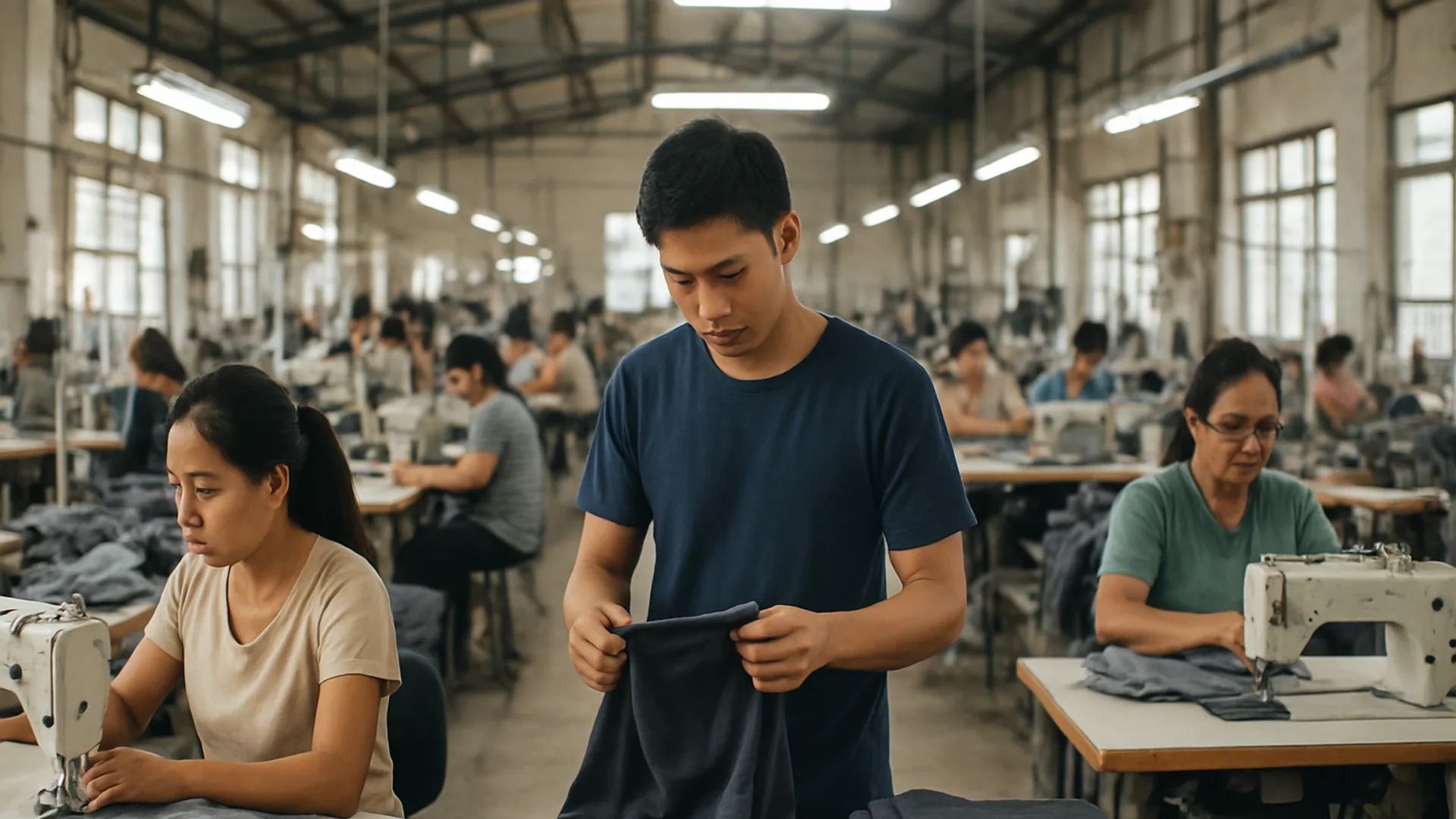
‘Bali garment’ refers to clothing designed and manufactured in Bali, Indonesia. It is not a single brand or style, it describes an industry cluster covering swimwear, activewear, resortwear, modest wear, streetwear, and uniforms produced on the island for export. Bali has grown from a craft-based economy into a structured manufacturing hub that ships to buyers in Australia, the US, Europe, and the Middle East.
The shift began decades ago, when the island’s tourism economy created a local demand for handmade textiles and resort clothing. Over time, that craft foundation attracted international buyers who needed more than market stalls: they needed consistent sizing, export documentation, repeatable quality, and scalable production. Today, Bali’s garment industry serves fashion startups testing new products alongside established international brands placing bulk orders. The two ends of that spectrum coexist because the best factories here have invested in proper machinery, trained teams, and full in-house workflows rather than outsourcing work down a fragmented supply chain.
What Categories of Garments Are Produced in Bali?
Bali factories produce a wider range of garments than most buyers expect on first inquiry. The main categories include:
- Swimwear: bikinis, one-pieces, swim shorts, rash guards, and matching cover-ups. Construction typically involves flatlock or coverstitch seams and four-way stretch fabrics to handle chlorine and saltwater.
- Activewear: leggings, sports bras, shorts, and training tops. These require precise pattern making and seam placement so garments perform under movement and repeated washing.
- Resortwear and loungewear: linen shirts, casual dresses, kaftans, and co-ord sets that sit between swimwear and everyday clothing.
- Modest swimwear and activewear: full-coverage designs produced for brands serving markets in the Middle East, Southeast Asia, and beyond. This category requires its own pattern approach and fabric selection to balance coverage with stretch and comfort.
- Streetwear: hoodies, tees, joggers, and outerwear pieces for brands that want a single production partner across multiple lifestyle categories.
- Uniforms: hospitality, corporate, and staff uniforms where consistency across a full size run is non-negotiable.
- Accessories: bucket hats and garment accessories that complement an apparel collection.
At Bali Garment Manufacturer, all of these categories are handled under one roof, from digital pattern making through to packaging and export. Buyers do not need a separate factory for printing, a separate partner for packaging, or a freight broker to handle export paperwork.
Why Do Global Buyers Choose Bali for Garment Production?
Several practical factors make Bali a strong sourcing choice, and each one connects to something concrete rather than a vague regional reputation.
Skilled workforce with a sewing heritage. Bali’s garment workers carry generational textile knowledge. That background matters when a production team needs to interpret a complex swimwear tech pack, match a colorway precisely, or catch a seam tension issue before it reaches bulk production.
Competitive cost structure. Production costs in Bali are competitive with other Southeast Asian hubs, and factories that hold a duty-free fabric import facility can pass material savings directly to their clients. Cost advantage here comes from structure, not from cutting corners on quality or labor conditions.
Flexible MOQ. This is one of the most cited reasons startups choose Bali over larger manufacturing countries. A factory willing to run a low MOQ for a new brand removes the financial risk of committing to 5,000 pieces before a single unit has sold.
Full-service, one-roof production. When design, printing, cutting, sewing, quality control, labeling, and export happen in one building under one management team, communication is faster and errors are caught earlier. Brands avoid the coordination delays and quality gaps that come from splitting production across multiple vendors.
Eco-friendly and recycled fabric options. Buyers with sustainability commitments can source recycled and eco-friendly fabrics through Bali factories. The specific options depend on current supplier stock, so confirming material availability before placing an order is important.
Geography and logistics. Bali sits close to Australia and within practical shipping range of the US, Europe, and the Middle East. Air freight serves time-sensitive orders; sea freight handles bulk efficiently.
For buyers focused specifically on swimwear, there is more detail on why global brands choose Bali for swimwear manufacturing.
How Does the Bali Garment Manufacturing Process Work?
Understanding the production workflow helps buyers prepare the right materials and set realistic expectations before the first conversation with a factory.
- Tech pack or design brief: The buyer provides sketches, measurements, construction notes, and fabric references, or the factory assists with building these from rough concepts.
- Digital pattern making and 3D sampling: Patterns are drafted digitally and reviewed in 3D before a physical sample is cut, which reduces revision rounds and material waste.
- Fabric sourcing: Fabric is sourced from approved suppliers. Where applicable, materials are imported through an in-house duty-free facility, keeping costs down.
- In-house printing: Custom prints are executed on-site using the appropriate method for the fabric and design, whether sublimation, DTF, or polyflex.
- Cutting: Panels are cut to pattern with precision, particularly important for stretch fabrics that shift if handled incorrectly.
- Sewing: Garments are assembled using the correct seam type for the product category, flatlock and coverstitch for swimwear and activewear, for example.
- Staged quality control: QC checks happen at multiple points in the process, not only at the final inspection, so defects are caught before they multiply across the run.
- Labeling and packaging: Private labels, hang tags, poly bags, and carton preparation are handled in-house to the buyer’s specifications.
- Export shipping: The finished order is shipped via the factory’s own export account, with documentation prepared for the destination country.
Buyers who want a detailed look at this workflow for swimwear specifically can read the complete swimwear manufacturing process from sketch to shipment.
What MOQ and Lead Times Should Buyers Expect?
Bali Garment Manufacturer works with startups at a low MOQ to test the market and scales to 25,000 pieces per month for established brands. Exact MOQ depends on product complexity and fabric choice. Sampling lead time and bulk production lead time are quoted separately. Buyers do not need to switch factories as volume grows, the same production team handles both small runs and large orders.
This continuity matters more than buyers sometimes realize at the start. When a factory already holds your approved patterns, your fabric supplier records, and your QC standards from a first small run, scaling up is faster and the product stays consistent. There is no re-sampling cycle, no new team learning your specifications from scratch, and no quality gap between the test run and the bulk order.
Lead times depend on design complexity, fabric availability, and factory capacity at the time of booking. No responsible factory can quote a fixed delivery date before reviewing a tech pack and confirmed volume. Ask for a production schedule after the sample is approved, and build buffer time into your launch plan.
What Should Buyers Check Before Choosing a Bali Garment Factory?
Choosing a factory is a business decision, not just a price comparison. Here are the practical questions to ask before committing.
- Does the factory hold its own export-import account? A factory without one is acting as a middleman. That adds cost, slows communication, and reduces your visibility into the actual production floor.
- Is production fully in-house or subcontracted? Subcontracting is not always disclosed upfront. Ask directly which stages happen on-site and which are sent out.
- How many quality control stages does the factory run? End-of-line inspection only is not sufficient for export-grade garments. Look for factories that run staged QC through the production process.
- What is the sampling policy? Understand how many revision rounds are included, what happens if the sample does not meet spec, and who carries the cost of revision samples.
- Can the factory provide fabric sourcing transparency? If you are making sustainability claims on your product, you need documentation from the factory, not just a verbal assurance.
- Are eco-friendly or recycled fabric options available? Ask specifically which materials are currently in stock or can be sourced, and request material content confirmation in writing.
For a structured way to evaluate any factory against these criteria, use the full factory evaluation checklist.
How Bali Garment Exports Reach Australia, the US, Europe, and the Middle East
Bali factories ship worldwide through established freight channels. Air freight suits time-sensitive orders and smaller volumes. Sea freight handles larger bulk orders more cost-effectively, though transit times are longer. The right choice depends on your delivery window and order size, and a factory can advise which option fits your situation.
Bali Garment Manufacturer holds its own export account, which means your shipment is managed directly rather than through a third-party broker. Combined with the duty-free fabric import facility, this structure reduces material input costs and keeps the supply chain tighter and more transparent.
Shipping timelines and costs vary by destination, volume, and current freight rates. Every order receives a quoted shipping estimate rather than a generic number, because quoting invented figures serves no one. Buyers in Australia, the US, Europe, and the Middle East regularly receive orders from Bali through these channels, and Indonesia’s export infrastructure is well-established for apparel according to trade data published by sources including the Indonesian Central Statistics Agency (BPS).
Frequently Asked Questions
- What types of garments are manufactured in Bali?
- Bali manufacturers produce swimwear, activewear, resortwear, modest swimwear and activewear, streetwear, uniforms, and accessories. Most established factories handle design, printing, cutting, sewing, and packaging under one roof, making them suitable for brands that need a single production partner across multiple product categories.
- Is Bali a good place to manufacture clothing for export?
- Yes. Bali has a skilled garment workforce, competitive production costs, and factories experienced in export compliance and international shipping. Factories like Bali Garment Manufacturer hold their own export-import accounts and duty-free fabric import facilities, which reduces material costs and simplifies logistics for buyers in Australia, the US, Europe, and the Middle East.
- What is the minimum order quantity for Bali garment factories?
- MOQ varies by factory and product type. Bali Garment Manufacturer works with startups at a low MOQ for market testing and scales to 25,000 pieces per month for established brands. Exact MOQ depends on fabric, construction complexity, and whether the order uses existing or custom patterns. Request a quote for your specific product to get an accurate figure.
- How long does it take to produce garments in Bali?
- Sampling and bulk production run on separate timelines. Sampling turnaround depends on design complexity and revision rounds. Bulk production lead time depends on order volume, fabric availability, and factory capacity at the time of booking. Factories provide a production schedule after the sample is approved. No responsible factory can give a fixed date before reviewing your tech pack and volume.
- Can Bali garment factories produce eco-friendly or recycled fabric clothing?
- Yes. Several Bali factories, including Bali Garment Manufacturer, offer recycled and eco-friendly fabric options for swimwear, activewear, and resortwear. The specific materials available depend on current supplier stock. Buyers should confirm fabric certifications and material content directly with the factory before placing an order to ensure the claim matches the product.
- What do I need to prepare before contacting a Bali garment factory?
- At minimum, prepare a clear design brief or tech pack, your target fabric and colorway, your required quantity, and your delivery deadline. Factories can assist with pattern making and sampling if you do not yet have a finalized tech pack, but having even rough sketches and fabric references speeds up the quoting process significantly.
Ready to Source Your Garments from Bali?
Bali garment manufacturing offers a combination that is hard to find elsewhere: flexible MOQ for brands at the testing stage, full-service in-house production, export-ready logistics, and the capacity to scale alongside your brand as it grows. The same team, the same quality standards, from your first run to your largest order.
Explore our factory services to see how we work, then reach out when you are ready to discuss your collection.
Leave a Reply
Related Posts
November 2, 2026
What Types of Manufacturing Companies Operate in Bali? Bali is not a heavy industrial island. There are...
October 29, 2026
Custom Resort Wear Manufacturer Bali: 2026 Buyer Guide What Is Custom Resort Wear Manufacturing and Who Needs...
October 26, 2026
Bali Clothing Manufacturer: Your 2026 Sourcing Handbook Why Bali Has Become a Serious Manufacturing Option for Fashion...