No products added!
October 26, 2026
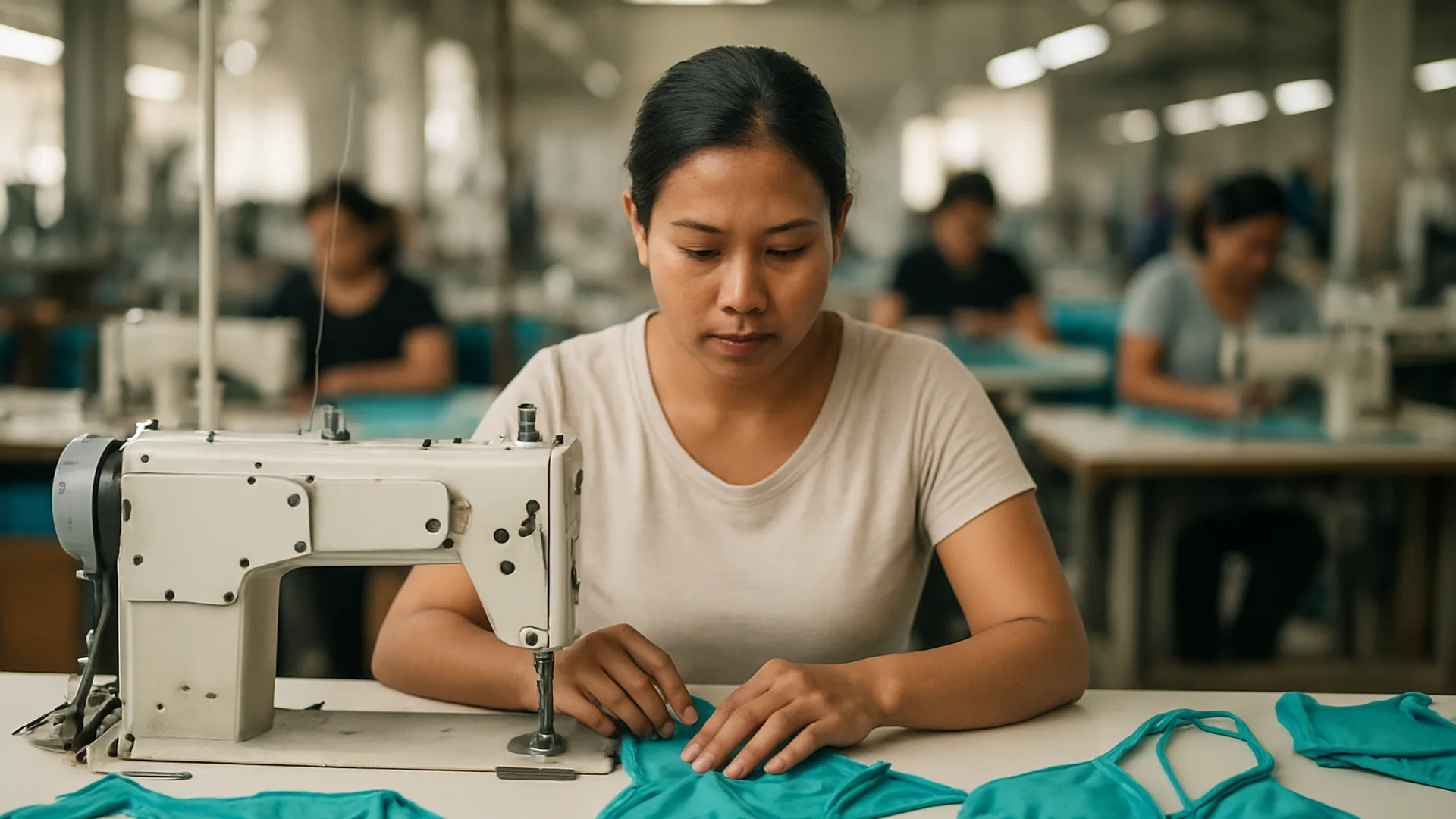

Bali Clothing Manufacturer: Your 2026 Sourcing Handbook
Why Bali Has Become a Serious Manufacturing Option for Fashion Brands
Bali’s reputation as a manufacturing hub is built on production capability, not scenery. The island has a trained workforce with real depth in swimwear and activewear construction: flatlock seaming, coverstitch finishing, four-needle stitching, and bonded seam techniques that meet export-market quality expectations. These are not skills learned from generic apparel training; they have been developed through years of producing for international swimwear and activewear labels.
Indonesia’s textile and garment export infrastructure is well established. According to data from Badan Pusat Statistik (BPS), the garment and textile sector is one of Indonesia’s top non-oil export contributors, which means port procedures, commercial documentation, and freight logistics are routine, not experimental. Bali-based manufacturers hold their own export-import accounts directly. That single detail removes a broker layer that adds cost and communication delay in other sourcing locations.
A duty-free fabric import facility is available to qualifying factories, which lowers the landed cost of performance fabrics for clients. Brand founders also visit Bali during product development, which makes in-person sample reviews practical in a way that sourcing from a remote factory location often is not.
What Types of Garments Can a Bali Manufacturer Actually Produce?
A capable Bali garment factory covers a wider category range than most buyers expect. The key is to match your specific product type to the factory’s documented experience, not just its category list.
- Swimwear: Triangle sets, one-pieces, trunks, and bikinis. Look for bonded seam capability and lined construction as baseline competencies.
- Activewear: Leggings, sports bras, bike shorts, and training tops. Four-needle flatlock seaming is the construction standard for stretch garments under repeated movement.
- Resortwear and loungewear: Cover-ups, resort dresses, kimono wraps, and linen-blend pieces. Sublimation printing in-house enables custom print placement across the full garment.
- Modest swimwear and activewear: Full-coverage swimsuits, rash guard sets, and longer-cut leggings. Coverage, lining, and fabric opacity testing all require specific attention beyond standard construction.
- Streetwear: Hoodies, sweatshirts, oversized tees, and joggers. DTF (direct-to-film) and screen print finishing are commonly used for graphics.
- Uniforms: Staff apparel, hospitality uniforms, and branded workwear with consistent sizing across larger runs.
- Bucket hats and accessories: Panel construction, structured and unstructured styles, custom labels.
Honest signal: not every Bali factory handles every category to the same standard. Always request a sample in your exact product type before committing to a bulk order. A factory’s willingness to attempt a category is not the same as demonstrated experience in it.
What Is the Minimum Order Quantity for a Bali Clothing Manufacturer?
Minimum order quantities in Bali vary by factory and product type. At Bali Garment Manufacturer, we work with startups testing the market at a low MOQ, scaling to production runs of up to 25,000 pieces per month for established brands. MOQ typically applies per style or per colorway, not across your total order, which is important to clarify before you commit. A factory that accommodates both stages means you do not have to re-qualify a new supplier when your brand grows.
This distinction matters practically. A brand launching with three styles in two colorways each needs to understand the MOQ per colorway, not just the overall order size. First-time buyers regularly underestimate this and find themselves either over-ordering a single style or unable to meet minimums across their range.
Working with a factory that scales from startup MOQ to high-volume production means your fit blocks, graded size sets, and established communication process carry forward. The painful cost of re-qualifying a new factory mid-growth, re-sampling every style, and re-briefing a new production team is real. Choosing a manufacturer with both low-MOQ flexibility and bulk capacity from the start avoids it entirely.
How Does the Production Process Work From Sketch to Shipment?
Every production run follows a clear sequence. The complete production process from sketch to shipment is covered in depth separately; here is the eight-stage overview:
- Tech pack or design brief submission: You provide measurements, construction details, fabric specs, colorway references, and label requirements. The more complete this document, the fewer revision rounds the sample requires.
- Digital pattern making and 3D design: The pattern team builds a digital block from your spec sheet, often with a 3D render for fit review before any physical fabric is cut.
- Sample development and approval: A physical sample is made, measured against the tech pack, and sent for your review. Revisions are documented and incorporated before sign-off.
- Fabric sourcing or duty-free fabric import: Standard and recycled performance fabrics are sourced, with duty-free import access used to reduce landed cost on qualifying materials.
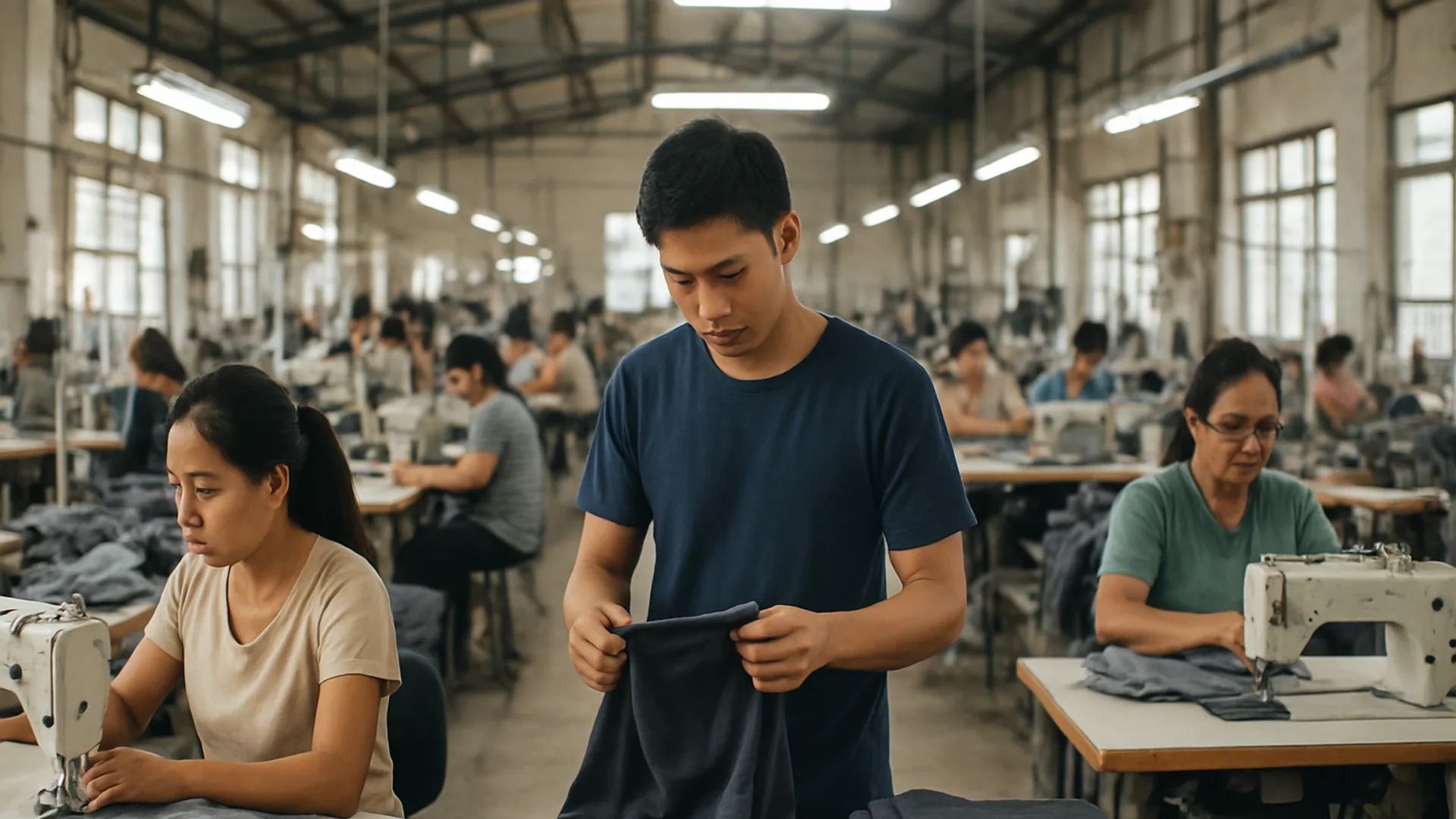
- In-house cutting and sewing: Cutting and sewing happen under the same roof. There is no sub-contracting opacity: the team handling your sample is the team running your bulk order.
- Staged quality control: Inspections occur at the cutting stage, after sewing, and again at pre-shipment. Issues are caught and corrected before they compound.
- Labeling and packaging: Hang tags, woven or printed labels, poly bags, and export cartons are prepared to your specification.
- Export shipping: Commercial documentation, HS codes, and freight coordination are handled through the factory’s own export-import account.
The single-roof advantage is simple: when sampling and bulk production happen in the same building with the same team, the results are consistent. Sub-contracting introduces variables that are difficult to trace and harder to fix.
What Are the Real Lead Times and Costs to Plan For?
Sample development generally takes two to four weeks after a complete tech pack or approved design brief is received. Bulk production runs after sample sign-off typically take four to eight weeks depending on order volume, fabric availability, and the number of colorways. Exact pricing depends on fabric choice, print method, and quantity, we quote per order rather than publish a price list. Buyers should also add customs clearance time in their own market: Australia, the US, Europe, and the Middle East each have different import timelines.
Several factors move costs up or down in a meaningful way. Recycled nylon or recycled polyester fabrics carry a higher base cost than standard performance fabric, but the duty-free fabric import facility can partially offset that for qualifying orders. In-house sublimation printing is more cost-effective at scale than outsourced digital print. Adding colorways increases cutting and setup time, so consolidating colorways where possible keeps unit costs lower. Order volume is the most direct lever: higher quantities reduce per-unit cost across fabric, trim, and production labor.
Plan your timeline backward from your launch or delivery date. Add customs clearance buffer: a commercial shipment entering Australia moves through clearance differently than one entering the US or a Gulf Cooperation Council country. Your customs broker in your market is the right source for current duty rates and clearance timelines.
How to Evaluate a Bali Clothing Manufacturer Before You Commit
Choosing a factory is a sourcing decision and a production partnership. These are the questions worth asking before you place any bulk order.
Does the factory own its machines or sub-contract sewing? Sub-contracted sewing means the factory cannot directly supervise the team stitching your garments. That is a quality-control risk, not just a communication inconvenience.
Can they share a staged QC process? A real quality control workflow has documented checkpoints: at cutting, after sewing, and at pre-shipment. A factory that cannot describe this clearly when asked has not systematized it.
Do they hold their own export-import account? This affects both cost and speed. A factory that routes exports through a third-party trading company adds a layer with its own margins and timelines.
What is the primary communication channel and typical response time? Production questions need timely answers. Understand how the factory communicates during a live production run, not just during the sales stage.
Can they provide a sample in your exact product category? A sportswear factory producing a modest swimsuit for the first time is a different risk profile than one with documented production history in that category.
Review the full buyer evaluation checklist before you make a final decision. Two red flags that appear consistently in difficult sourcing situations: no formal sampling stage before bulk production, and no written QC documentation. Both signal that quality outcomes depend on luck rather than process.
Sustainable and Ethical Production: What Bali Manufacturers Can Offer
Recycled fabric options are available for swimwear and activewear production in Bali. Recycled nylon and recycled polyester bases are the most commonly sourced options. Availability depends on the fabric weight and construction you need, and specialty fabric lead times can run slightly longer than standard stock. Confirm stock availability with your factory before committing a recycled fabric to a bulk order timeline.
“Ethically made” has operational meaning here. A founder-led factory with an in-house team, where cutting, sewing, and quality control all happen under one roof, is structurally different from a factory that distributes piecework to home workers or multiple external units. In-house production means accountability is traceable at every stage.
Modest swimwear and activewear is a growing production category, particularly for buyers serving the Middle East market. Full-coverage swimsuits, long-sleeve rash guard sets, and extended-length active leggings require specific construction attention: lining weight, fabric opacity, and coverage points all differ from standard swimwear. This is a category where demonstrated sampling history matters before bulk commitment.
We do not claim certifications we do not hold. If a specific certification is required for your market or retail channel, raise it early in the sourcing conversation.
Next Steps: How to Start Working With a Bali Clothing Manufacturer
Starting production is a three-step process:
- Prepare your brief or tech pack. Include measurements, fabric specifications, construction notes, colorway references, and label requirements. If you do not have a tech pack yet, a detailed mood board and reference samples are a workable starting point.
- Request a sample for your specific garment type. This is non-negotiable before a bulk order. Review the sample against your spec sheet point by point: measurements, seam quality, print registration, and label placement.
- Confirm MOQ, timeline, and shipping terms before placing a bulk order. Understand the MOQ per style and per colorway, the production lead time from sample sign-off, and the shipping and documentation process for your destination market.
Private label and custom label services are available at both startup MOQ and bulk volume. Review our factory services for the full scope of what is offered under one roof.
The scale range is real: brands start with a low MOQ to test the market and grow to 25,000 pieces per month within the same production relationship. You do not need to switch factories as your brand grows. Send us your brief and we will come back with a production quote based on your specific garment type, volume, and timeline.
Frequently Asked Questions
Does a Bali clothing manufacturer handle both sampling and bulk production?
Yes. A full-service Bali manufacturer handles the entire process under one roof: digital pattern making, sampling, fabric sourcing, cutting, sewing, quality control, and export. This matters because sub-contracted sampling and in-house bulk production often produce different results. Confirm at the outset that the factory handling your sample is the same one doing your bulk run.
Can I import clothing manufactured in Bali into Australia or the US without high duties?
Indonesia does not currently hold a free-trade agreement with Australia or the United States that eliminates garment import duties entirely, but duties vary by product category and HS code. Buyers should check current duty rates with their customs broker before placing a bulk order. Your Bali manufacturer should be able to provide the correct HS code and a commercial invoice in the format your customs authority requires.
What information do I need to provide to start production with a Bali garment factory?
At minimum: a tech pack or detailed design brief with measurements, fabric specifications, construction details, and colorway information. If you do not have a tech pack, a mood board and reference samples are a starting point. The factory’s pattern-making team can develop the spec from there. The more complete your brief, the faster and more accurate the first sample will be.
Is sustainable or recycled fabric available from Bali garment manufacturers?
Yes. Recycled and eco-friendly fabric options are available for swimwear and activewear production in Bali. These include recycled nylon and recycled polyester bases. Availability depends on the specific fabric weight and weave you need, and lead times for specialty fabrics may be slightly longer. Ask your factory to confirm stock availability and sampling lead time before committing to a recycled fabric for a bulk order.
How do I verify the quality of a Bali clothing manufacturer before placing a bulk order?
Request a paid sample in your specific garment category before any bulk commitment. Review the sample against your tech pack point by point: measurements, seam construction, print registration, and label placement. Ask the factory to share its quality control process, ideally a staged inspection at cutting, sewing, and pre-shipment. A factory that cannot describe its QC steps clearly is a meaningful risk signal.
Can a Bali manufacturer produce modest swimwear and activewear for the Middle East market?
Yes. Modest swimwear and activewear, including full-coverage swimsuits, rash guard sets, and longer-cut active leggings, are a growing production category. Construction requirements differ from standard swimwear: coverage, lining, and fabric opacity testing all require specific attention. Confirm that the factory has existing samples or completed orders in modest styles, not just a willingness to attempt them.
Leave a Reply
Related Posts
November 2, 2026
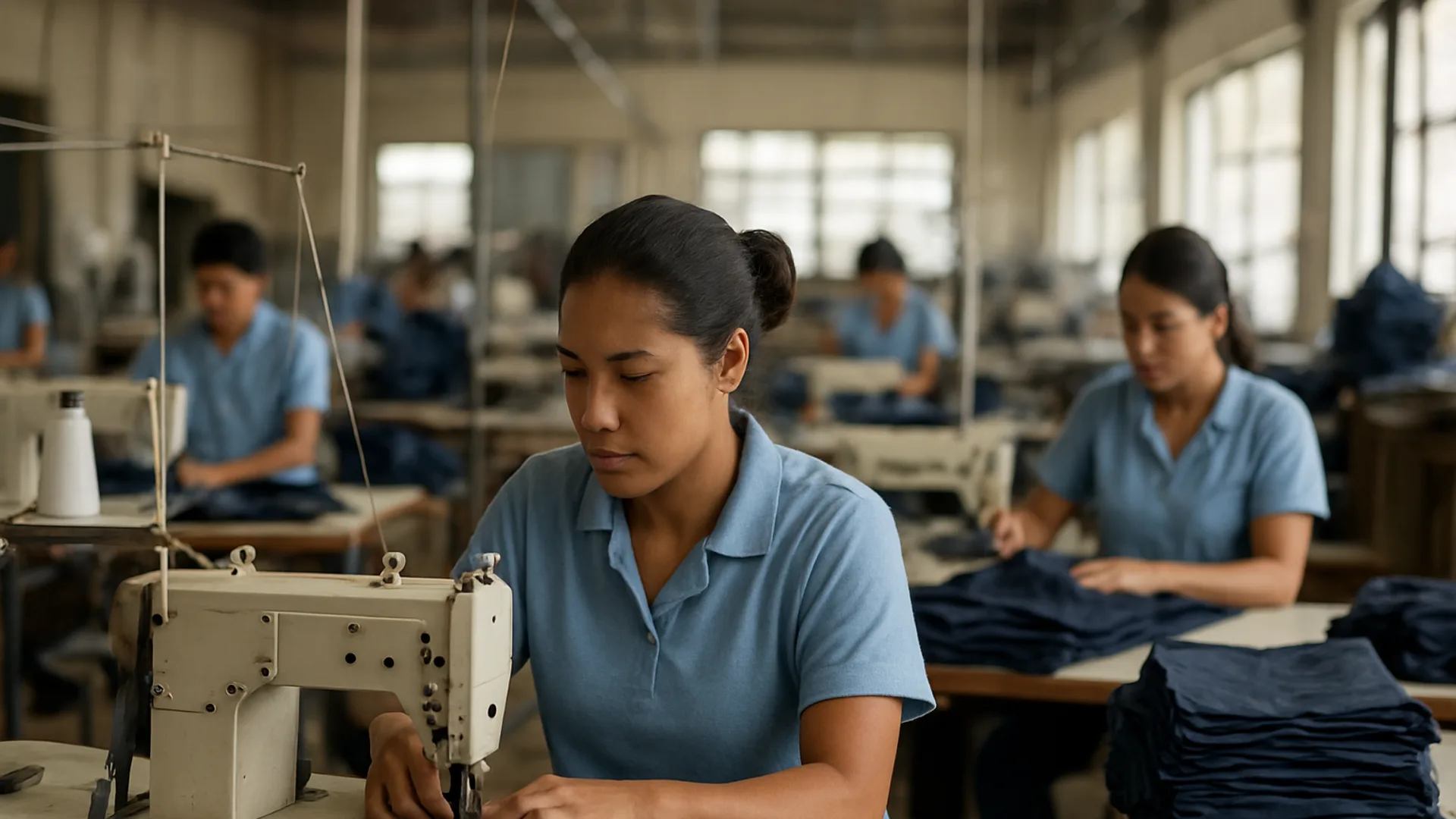
What Types of Manufacturing Companies Operate in Bali? Bali is not a heavy industrial island. There are...
October 29, 2026
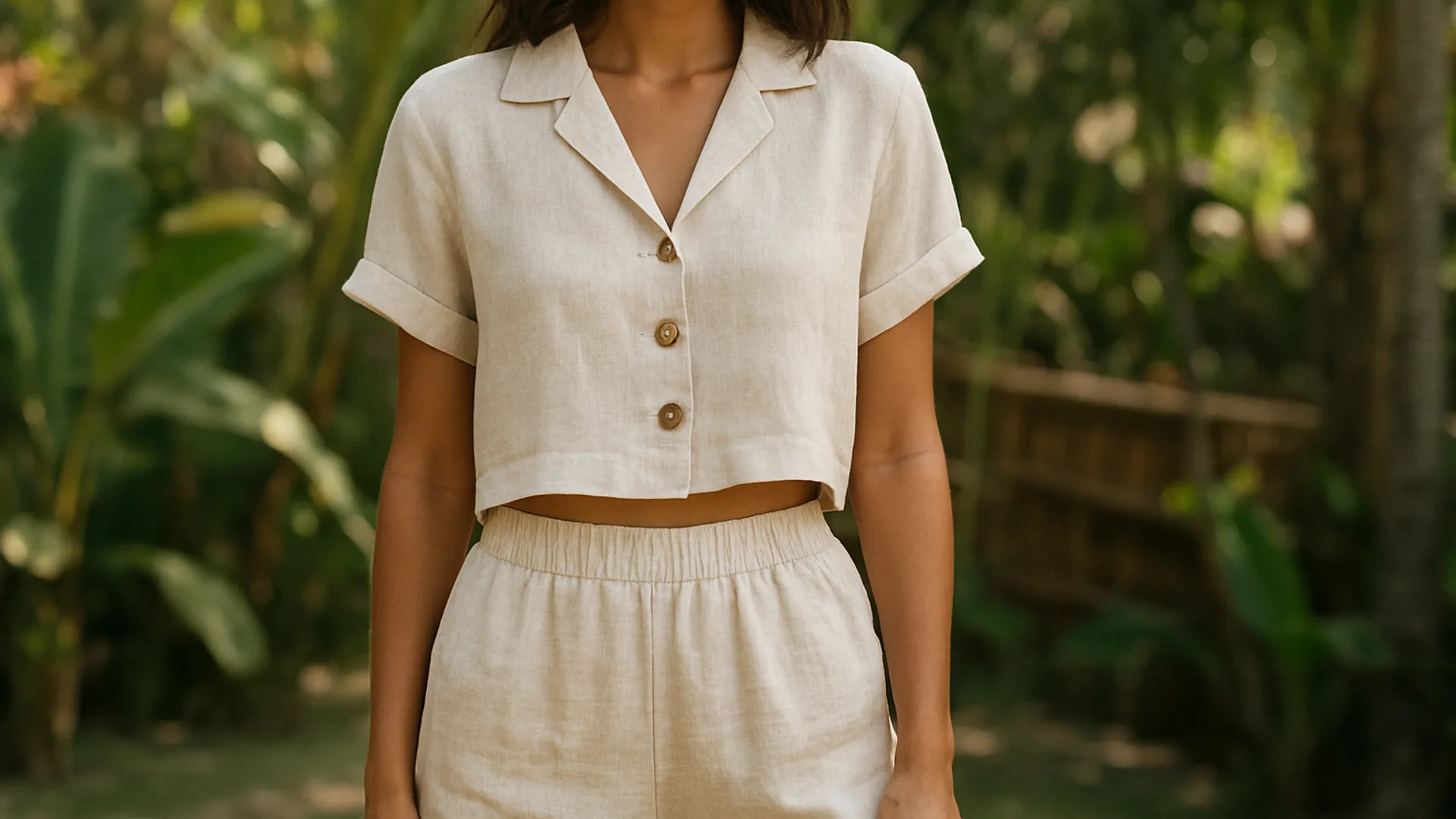
Custom Resort Wear Manufacturer Bali: 2026 Buyer Guide What Is Custom Resort Wear Manufacturing and Who Needs...
October 27, 2026
What Does 'Bali Garment' Actually Mean? 'Bali garment' refers to clothing designed and manufactured in Bali, Indonesia....